

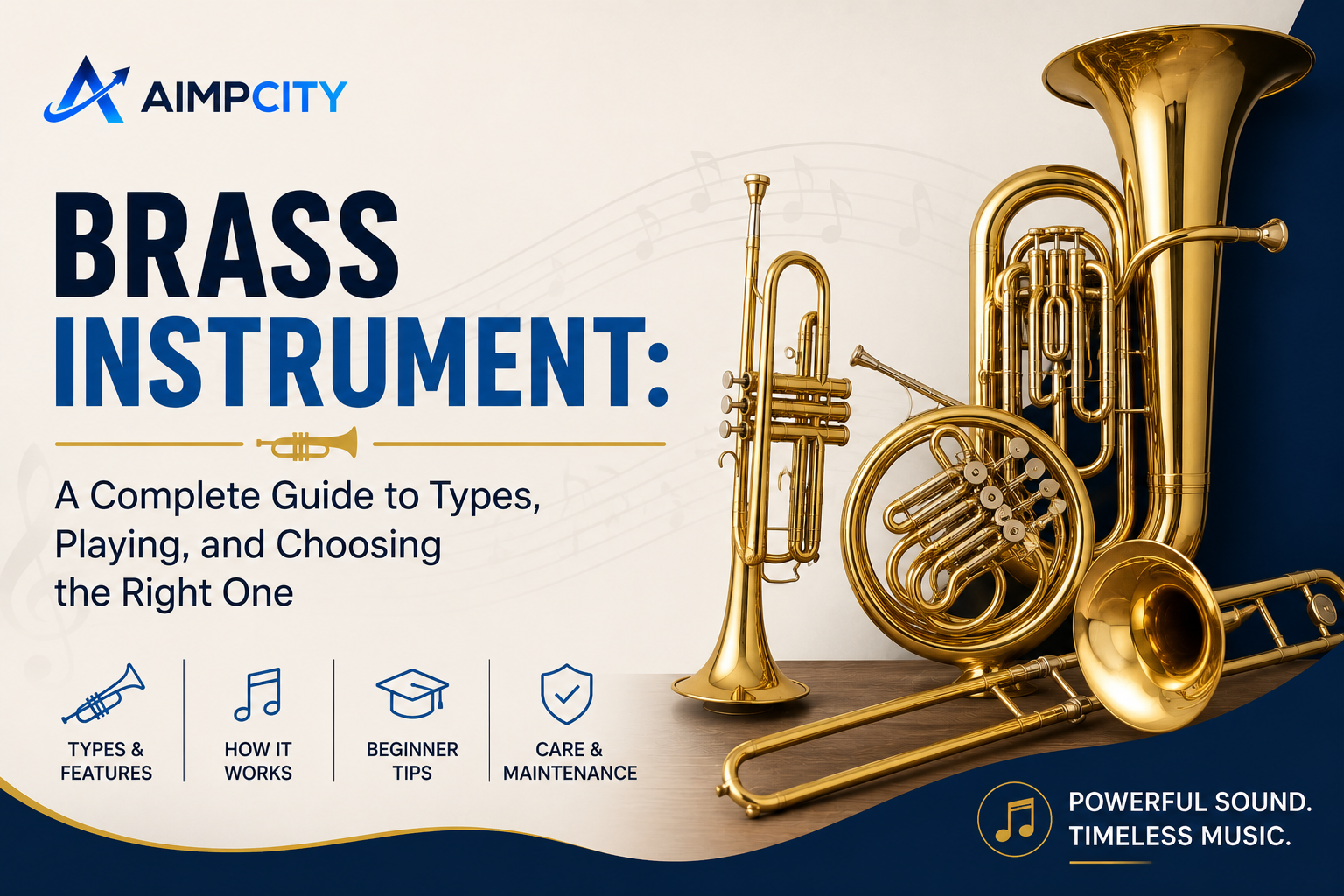
A brass instrument is one of the most recognizable members of the wind instrument family, producing bold, rich, and expressive sounds that have shaped music for centuries. From classical orchestras and jazz bands to marching bands and film scores, brass instruments play an essential role in almost every genre of music.
Whether you’re a beginner looking to learn your first instrument, a student researching music, or simply curious about how brass instruments work, this guide covers everything you need to know—from their history and different types to maintenance tips and buying advice.
What Is a Brass Instrument?
A brass instruments is a musical instrument that produces sound through the vibration of the player’s lips into a cup-shaped mouthpiece. Contrary to popular belief, an instrument doesn’t have to be made of brass to belong to the brass family. The defining feature is how sound is produced, not the material used.
Players change pitch by adjusting lip tension while using valves or a slide to alter the length of the instrument’s tubing.
A Brief History of Brass Instruments
Brass instruments have evolved significantly over thousands of years. Early versions were made from animal horns, shells, and wood before metal instruments became common.
During the 19th century, the invention of valves transformed brass instruments by allowing musicians to play complete chromatic scales with greater ease. Today, modern brass instruments are precision-engineered for professional performance while remaining accessible to beginners.
Types of Brass Instruments
Each brass instrument has its own unique sound, range, and musical role.
| Instrument | Sound | Best For | Difficulty |
|---|---|---|---|
| Trumpet | Bright and powerful | Beginners, Jazz, Bands | Easy to Moderate |
| Trombone | Warm and smooth | Jazz, Orchestra | Moderate |
| French Horn | Soft and rich | Classical Music | Advanced |
| Tuba | Deep and resonant | Concert Bands, Orchestra | Moderate |
Trumpet
The trumpet is the most popular brass instrument worldwide. It features three valves and delivers a bright, energetic sound suitable for jazz, pop, orchestras, and marching bands.
Because of its manageable size and wide availability, it is often recommended for beginners.
Trombone
The trombone differs from other brass instruments by using a slide instead of valves. This unique design allows for smooth note transitions and expressive performances.
It is widely used in orchestras, jazz ensembles, and brass bands.
French Horn
Known for its warm and elegant tone, the French horn is a staple of orchestral music. Although rewarding to master, it requires excellent breath control and precision, making it more challenging for beginners.
Tuba
The tuba is the largest member of the brass family and produces the lowest notes. It provides the harmonic foundation in orchestras, military bands, and concert bands.
READ ALSO : Bruce Forsyth: The Legendary TV Host Who Defined British Entertainment
How Does a Brass Instrument Work?
Producing sound on a brass instrument involves several components working together:
- The player buzzes their lips into the mouthpiece.
- The buzzing creates vibrations.
- Air travels through the tubing.
- The instrument amplifies and shapes the sound.
- Valves or slides change the tubing length, creating different notes.
The combination of airflow, embouchure (lip position), and breath support determines the instrument’s tone and pitch.
Benefits of Learning a Brass Instrument
Learning a brass instrument offers advantages beyond making music.
- Improves lung capacity and breathing control.
- Enhances concentration and memory.
- Develops discipline through regular practice.
- Builds teamwork in ensembles and bands.
- Encourages creativity and self-expression.
- Boosts confidence through live performances.
These benefits make brass instruments popular among children, teenagers, and adults alike.
Choosing the Right Brass Instrument
Selecting the right instrument depends on several factors.
Consider Your Goals
Ask yourself:
- Are you joining a school band?
- Do you enjoy jazz or classical music?
- Will you play professionally or as a hobby?
Budget
Entry-level brass instruments are affordable, while professional models offer premium materials and craftsmanship.
Size and Comfort
Younger players may find a trumpet easier to handle, while adults with larger frames may comfortably play the trombone or tuba.
Maintenance Requirements
All brass instruments require regular cleaning, valve oiling or slide lubrication, and proper storage.
Common Mistakes Beginners Should Avoid
Many new players struggle because of avoidable habits.
- Using excessive mouthpiece pressure.
- Skipping warm-up exercises.
- Neglecting regular instrument cleaning.
- Practicing with poor posture.
- Inconsistent breathing technique.
Developing good habits early makes learning much easier and helps produce a better tone.
Pro Tip: Practice for 20–30 minutes daily instead of one long session each week. Consistent practice improves muscle memory, breath control, and endurance much faster.
Caring for Your Brass Instrument
Proper maintenance extends the life of your instrument and keeps it performing at its best.
Follow these best practices:
- Clean the mouthpiece after each use.
- Empty moisture from the instrument regularly.
- Oil valves or lubricate slides as recommended.
- Wipe fingerprints from the exterior.
- Store the instrument in a hard protective case.
- Schedule professional servicing annually if used frequently.
Well-maintained instruments not only sound better but also retain their value over time.
Key Takeaway: A brass instrument is defined by how it produces sound—not by the metal it’s made from. Choosing the right instrument, practicing consistently, and maintaining it properly are the keys to long-term musical success.
Conclusion
A brass instrument offers an exciting way to explore music while developing valuable lifelong skills. Whether you’re drawn to the brilliant sound of the trumpet, the expressive slide of the trombone, the warm tones of the French horn, or the deep resonance of the tuba, every brass instrument has something unique to offer.
By understanding how these instruments work, choosing one that fits your goals, and practicing regularly, you’ll build a solid foundation for years of musical enjoyment.
Frequently Asked Questions
1. What makes a brass instruments different from other wind instruments?
A brass instruments creates sound through lip vibration into a cup-shaped mouthpiece, while woodwind instruments use reeds or an air stream across an opening. The sound production method, rather than the material, determines the instrument family.
2. Which brass instruments is best for beginners?
The trumpet is generally considered the best choice for beginners because it is lightweight, widely available, and supported by abundant learning resources. However, the best instruments ultimately depends on your musical interests and physical comfort.
3. Do brass instruments require a lot of maintenance?
Regular maintenance is straightforward and includes cleaning the mouthpiece, emptying moisture, oiling valves or lubricating slides, and storing the instrument properly. Consistent care helps maintain sound quality and extends the instrument’s lifespan.
4. Can adults learn a brass instruments?
Absolutely. Adults can successfully learn any brass instrument with regular practice, proper instruction, and patience. Many community bands and music schools welcome beginners of all ages.
5. How long does it take to learn a brass instruments?
Most beginners can play simple melodies within a few months of consistent practice. Reaching an advanced level depends on practice frequency, instruction quality, and individual dedication, but steady improvement comes with regular effort.
