

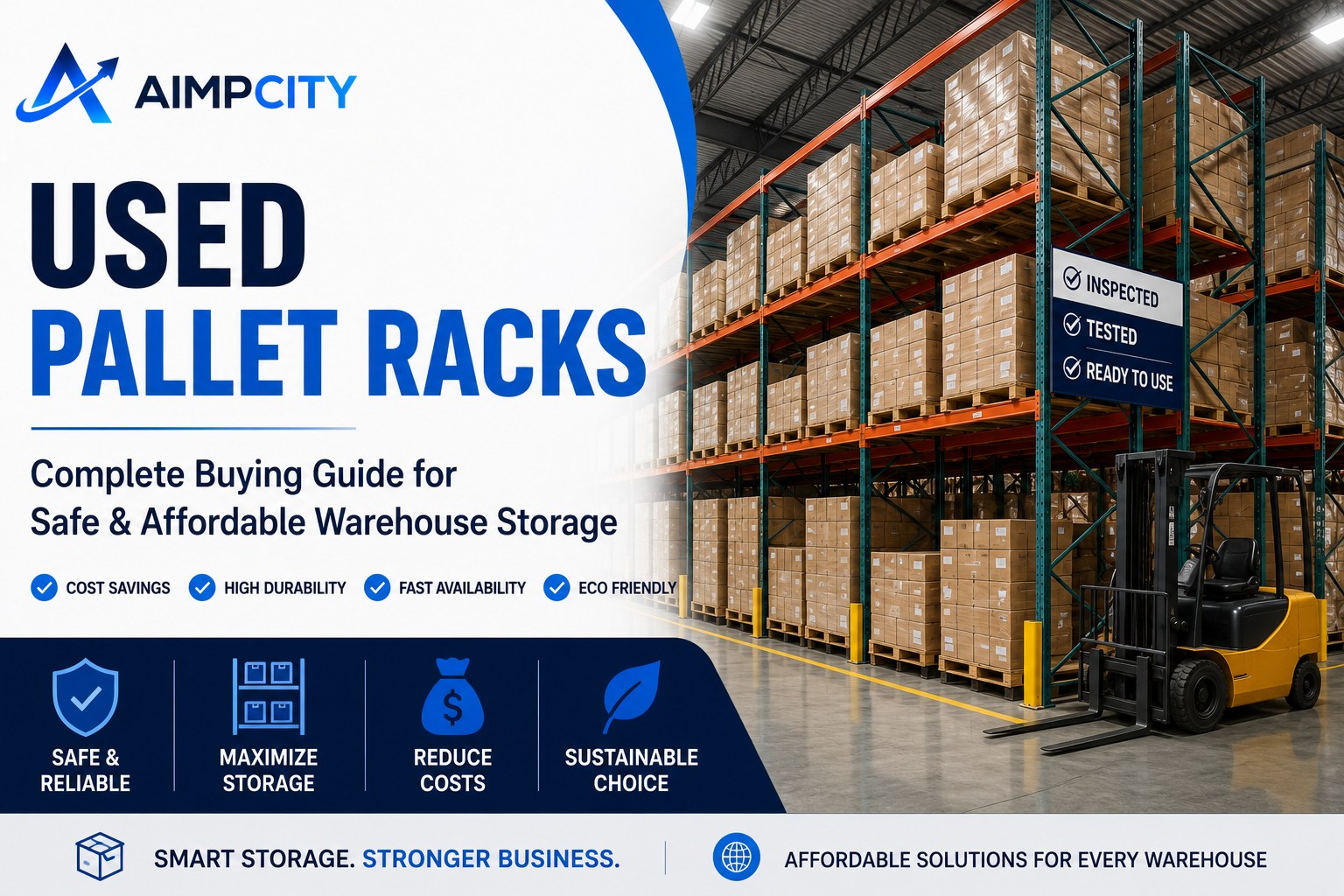
Warehouse storage plays a vital role in improving efficiency, inventory management, and workplace safety. For businesses looking to reduce costs without sacrificing quality, used pallet racks offer a practical and budget-friendly solution. Whether you’re opening a new warehouse, expanding your storage capacity, or replacing damaged shelving, buying pre-owned pallet racking can deliver significant savings.
This guide explains everything you need to know about used pallet racks, including their benefits, common types, inspection tips, installation best practices, and how to choose the right system for your business.
What Are Used Pallet Racks?
Used pallet racks are previously owned warehouse storage systems that have been inspected, refurbished if necessary, and resold for commercial use. They are commonly purchased by warehouses, distribution centers, manufacturers, retailers, and logistics companies looking to maximize storage while controlling costs.
Most used racking systems are manufactured from heavy-duty steel and can provide many years of reliable service when properly maintained.
Why Businesses Choose Used Pallet Racks
Purchasing used pallet racks offers several advantages over buying new equipment.
Cost Savings
The biggest benefit is affordability. Businesses can often save a significant amount compared to purchasing brand-new warehouse racking.
Faster Availability
Unlike new systems that may require manufacturing lead times, used pallet racks are often available immediately, helping businesses expand operations quickly.
Sustainable Choice
Reusing industrial equipment reduces waste and supports environmentally responsible business practices by extending the life of quality steel products.
Proven Durability
High-quality pallet racks are designed for years of heavy-duty use. When inspected properly, used systems remain dependable and safe.
Common Types of Used Pallet Racks
Different warehouse operations require different storage solutions.
| Rack Type | Best For | Main Advantage |
|---|---|---|
| Selective Pallet Rack | General warehouses | Easy pallet access |
| Drive-In Rack | High-density storage | Maximizes storage space |
| Push Back Rack | Multiple pallet storage | Efficient inventory flow |
| Cantilever Rack | Lumber and pipes | Ideal for long materials |
| Pallet Flow Rack | FIFO inventory | Improved stock rotation |
Understanding your inventory type and warehouse layout helps determine the best racking system.
How to Inspect Used Pallet Racks Before Buying
Not all second-hand warehouse racks offer the same quality. Careful inspection is essential.
Check for Structural Damage
Inspect upright frames and beams for:
- Bent steel
- Cracks
- Rust
- Missing components
- Weld damage
Even minor structural issues can affect load capacity.
Verify Load Ratings
Ensure the original manufacturer labels remain intact whenever possible. Load capacities should match your warehouse requirements.
Confirm Compatibility
If adding to an existing storage system, verify that beam sizes, connectors, and upright frames are compatible with your current racks.
Buy From Reputable Suppliers
Choose dealers that inspect and grade used pallet racks before resale. Reputable suppliers typically provide installation guidance and replacement components if needed.
Advantages and Disadvantages
Advantages
- Lower upfront investment
- Immediate availability
- Eco-friendly solution
- Strong steel construction
- Suitable for most warehouse operations
Disadvantages
- Limited inventory compared to new systems
- Cosmetic wear may be visible
- Some discontinued models have fewer replacement parts
- Inspection is essential before purchase
Best Practices for Installation
Proper installation improves both safety and efficiency.
- Measure your warehouse dimensions carefully.
- Design aisle widths for forklifts.
- Anchor uprights securely to the floor.
- Install beam safety locks.
- Clearly display load capacity labels.
- Conduct regular safety inspections.
Professional installation is recommended for large warehouses or high-capacity storage systems.w
READ ALSO : Brass Instrument: A Complete Guide to Types, Playing, and Choosing the Right One
Common Buying Mistakes to Avoid
Businesses often make avoidable errors when purchasing used warehouse racking.
- Choosing the lowest price without inspecting quality.
- Ignoring manufacturer load ratings.
- Mixing incompatible rack brands.
- Failing to inspect for hidden damage.
- Overloading storage systems after installation.
Avoiding these mistakes protects employees while extending the life of your warehouse equipment.
Maintenance Tips
Routine maintenance keeps used pallet racks operating safely.
- Inspect racks monthly.
- Replace damaged beams immediately.
- Tighten loose hardware.
- Keep forklifts away from upright frames.
- Train employees on safe pallet loading.
- Schedule annual professional inspections.
Proper maintenance reduces downtime and improves workplace safety.
Pro Tip: Always purchase used pallet racks from suppliers that inspect each component and provide load-capacity information. Saving money should never come at the expense of warehouse safety.
📌 Key Takeaway: Used pallet racks provide an affordable, reliable, and sustainable storage solution for warehouses. By choosing quality equipment, inspecting it carefully, and following proper installation and maintenance practices, businesses can maximize storage while minimizing costs.
Conclusion
Used pallet racks are an excellent investment for businesses seeking dependable warehouse storage without the higher cost of new systems. They offer durability, flexibility, and immediate availability, making them ideal for warehouses, retail distribution centers, manufacturers, and logistics companies across the USA, UK, and Canada.
Before purchasing, inspect the equipment carefully, verify load ratings, and work with reputable suppliers to ensure long-term performance and workplace safety.
Frequently Asked Questions
1. Are used pallet racks safe to use?
Yes. Used pallet racks are safe when they have been professionally inspected, installed correctly, and maintained regularly. Always verify load capacities and check for structural damage before purchasing.
2. How much can businesses save by buying used pallet racks?
Savings vary depending on the brand, condition, and availability, but businesses often spend considerably less than purchasing comparable new systems while still receiving reliable warehouse storage.
3. Can different pallet rack brands be combined?
Some brands are compatible, while others are not. Always verify beam connectors, upright dimensions, and manufacturer specifications before mixing components from different systems.
4. What industries commonly use used pallet racks?
Warehousing, manufacturing, retail distribution, e-commerce fulfillment, food storage, automotive parts suppliers, and logistics companies frequently use used pallet racks to optimize storage capacity.
5. How often should pallet racks be inspected?
Visual inspections should be performed monthly, with a more comprehensive professional inspection conducted at least once a year or whenever damage is suspected.
