

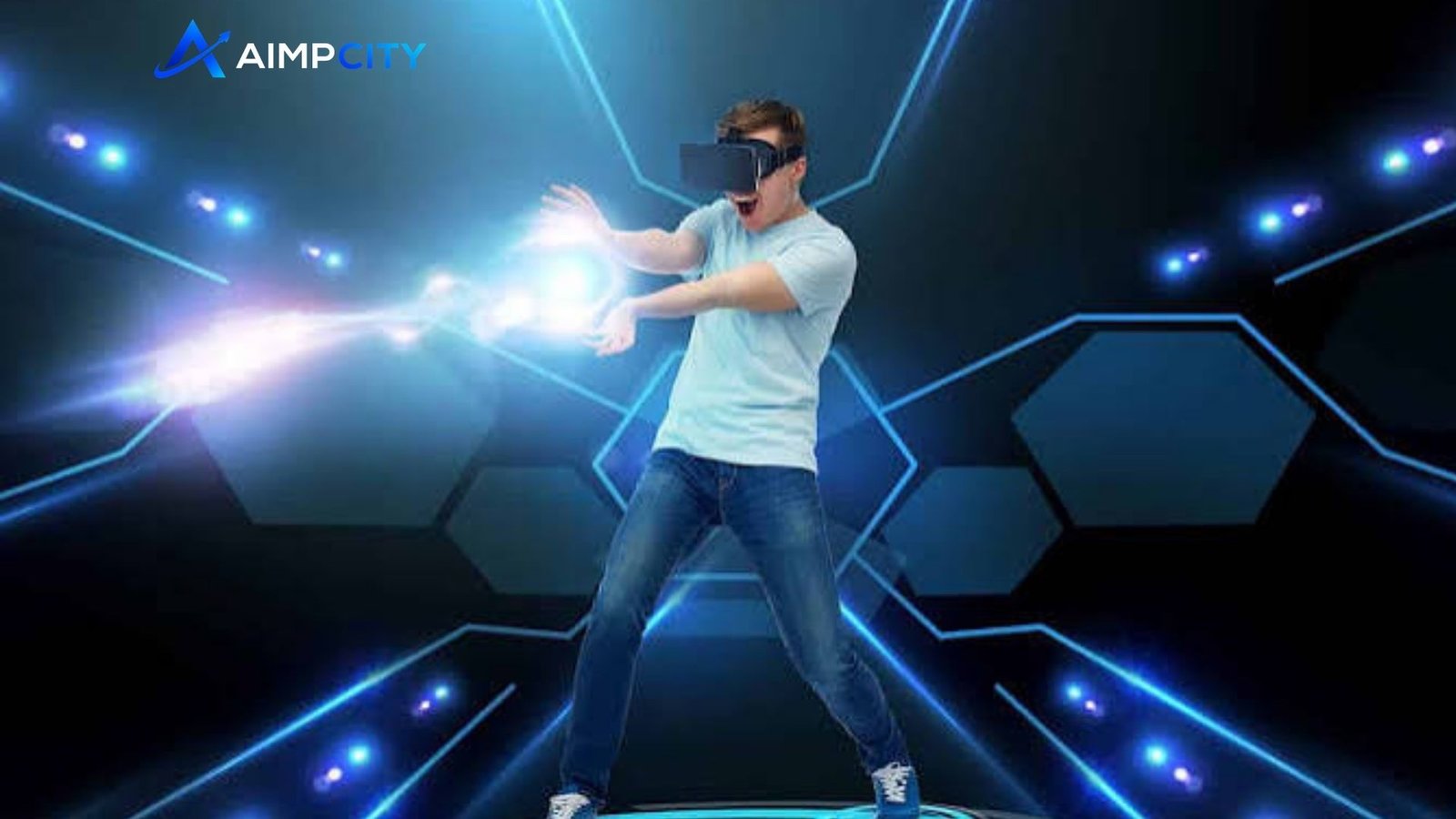
Virtual reality experiences place users inside computer-generated environments where they can look around, interact with objects, and respond to simulated situations. Unlike watching a video on a conventional screen, VR can create a stronger sense of presence by controlling what appears around the user.
That makes VR useful far beyond gaming. Museums, schools, businesses, healthcare organizations, tourism operators, and training providers increasingly use immersive technology for exploration, education, simulation, and entertainment. The best applications are not simply impressive to look at; they give people something meaningful to do.
What Are Virtual Reality Experiences?
Virtual reality experiences are interactive digital activities delivered through VR equipment, typically a head-mounted display with motion tracking and controllers. Depending on the application, users might explore a historical setting, practice a workplace procedure, attend a virtual event, manipulate a 3D object, or play an interactive game.
The defining characteristic is immersion. The virtual environment responds to the user’s movements, creating a feeling of being inside rather than merely observing the content.
Not every VR application needs the same level of immersion. Some rely heavily on visual realism, while others focus on interaction, storytelling, spatial awareness, or repeated practice. Research into immersive learning suggests that VR can support skill and competency development, but its effectiveness depends on how the technology is designed and integrated into the activity.
Where Virtual Reality Experiences Are Being Used
The versatility of VR explains why it appears in such different industries.
Entertainment: Games, interactive stories, virtual concerts, and location-based attractions use VR to make the participant part of the experience.
Education: Students can explore environments that would otherwise be inaccessible, visualize complex subjects, or practice tasks in simulated settings. Recent research has found potential benefits for engagement and learning, although educators still need appropriate training and technical support.
Professional training: Aviation, manufacturing, safety, healthcare, and other sectors can use simulation to rehearse procedures without immediately exposing learners to real-world consequences. A 2026 study of pilot training, for example, found benefits for practical flight-skill development while also emphasizing that VR cannot replace actual flight experience.
Tourism and culture: Virtual visits can introduce people to landmarks, exhibitions, archaeological sites, and destinations before or instead of physical travel.
Business and design: Teams can use three-dimensional environments to visualize spaces, demonstrate products, or rehearse scenarios.
The strongest use cases tend to share one feature: VR offers something that would be difficult, expensive, dangerous, or impossible to reproduce conveniently in the physical world.
What Makes a Good VR Experience?
Not all virtual reality experiences are equally effective. Technical quality matters, but compelling VR depends on more than high-resolution graphics.
| Factor | What to look for | Why it matters |
|---|---|---|
| Immersion | Responsive visuals and accurate tracking | Strengthens the sense of presence |
| Interaction | Natural controls and meaningful actions | Keeps users actively involved |
| Comfort | Good headset fit and smooth movement | Reduces physical discomfort |
| Content | Clear purpose and coherent design | Prevents technology from becoming a distraction |
| Accessibility | Adjustable controls and suitable interfaces | Allows more people to participate |
| Performance | Stable frame rates and responsive systems | Supports a smoother experience |
For educational and professional applications, instructional design is especially important. A recent systematic review of teacher education found that immersive and interactive VR can support training, while also identifying cost, technical limitations, discomfort, and safety as adoption challenges.
💡 Pro Tip: If you are choosing a VR activity for a group, test the experience yourself before booking or deploying it. Check movement requirements, session length, accessibility options, and whether users can participate comfortably without becoming overwhelmed.
Benefits and Limitations to Consider
The biggest advantage of VR is its ability to create experiences that feel spatial and interactive. A learner can practice a procedure, a visitor can explore a reconstructed environment, and a trainee can repeat a scenario without needing to recreate the physical setting each time.
Repeatability can be particularly valuable for training. Users can make decisions, review outcomes, and try again. Research on teacher education has identified repeatability, interactivity, and realistic simulation as useful characteristics of VR-based training.
There are trade-offs, however. Headsets can be expensive, technical setup can take time, and some users experience discomfort or motion sickness. VR also cannot reproduce every physical sensation or real-world consequence. In pilot training, for instance, researchers found that VR was useful as a supplement but not a substitute for actual flight experience.
Content quality is another consideration. A poorly designed VR activity can feel like a novelty rather than a useful tool. The objective should come first, with immersive technology serving that objective.
How to Choose the Right Experience
When comparing virtual reality experiences, start with the purpose rather than the headset or graphics.
Ask five practical questions:
- What should the participant gain? Entertainment, knowledge, confidence, practical skill, or simply a memorable experience?
- Who will use it? Consider age, technical familiarity, accessibility requirements, and comfort with immersive environments.
- How interactive is it? Watching a virtual scene and actively manipulating an environment produce very different experiences.
- How long does it last? A shorter, focused session may be more effective than an unnecessarily long one.
- What happens afterward? For training or education, discussion, feedback, assessment, or reflection can turn an impressive simulation into a more useful learning activity.
For organizations, pilot testing is sensible before investing in large-scale deployment. Check hardware reliability, software compatibility, cleaning procedures, user support, and the physical space required.
Are VR Experiences Worth Trying?
For entertainment, the answer often comes down to personal preference. People who enjoy interactive games, immersive storytelling, or unusual attractions may find VR particularly engaging.
For education and training, the question is more specific: does VR solve a genuine problem? Evidence suggests it can contribute to learning and skill development, but results vary by application, learning objective, equipment, and implementation. A 2025 meta-analysis of VR in teacher education found a moderate overall positive effect, with outcomes varying according to factors including immersion level and learning objectives.
That distinction matters. The most valuable virtual reality experiences are not necessarily the most visually spectacular. They are the ones where immersion makes an activity clearer, safer, more accessible, more repeatable, or more engaging.
📌 Key Takeaway: Choose VR for what immersion enables, not simply because it is immersive. A well-designed simulation with a clear purpose can provide more value than a technically impressive experience with little meaningful interaction.
Frequently Asked Questions
Do I need an expensive headset for VR?
Not necessarily. Headset requirements depend on the application. Some experiences run on standalone headsets, while others require a more powerful computer. The right choice depends on the software, desired visual quality, tracking requirements, and whether the experience is intended for individual or group use.
Can virtual reality be used for education?
Yes. VR can support exploration, simulation, procedural practice, and visualization. Research has reported promising educational applications, but effective results depend on instructional design rather than immersion alone. Schools and training providers also need to consider equipment costs, teacher preparation, accessibility, technical support, and appropriate learning objectives.
Are VR experiences safe?
For most users, VR is generally used as a controlled digital activity, but discomfort, dizziness, eye strain, or motion sickness can occur. Users should follow the equipment manufacturer’s safety guidance, take breaks when needed, and stop if they feel unwell. Physical surroundings should also be cleared to reduce the risk of collisions.
How long should a VR session last?
There is no single ideal duration for every application. Session length should account for the user’s age, comfort, activity type, and intensity. Shorter sessions with breaks may be preferable for demanding simulations. For training, several focused sessions can also be more practical than one prolonged session.
Can VR replace real-world experiences?
Usually not. VR can simulate environments and procedures, but it cannot reproduce every physical, social, sensory, or environmental condition. Its strongest role is often as a complement to real-world activity—for example, allowing users to rehearse concepts or procedures before applying them outside the virtual environment.
Conclusion
The appeal of virtual reality experiences lies in their ability to turn digital content into something users can explore and interact with. That makes VR valuable across entertainment, education, tourism, design, and professional training.
The technology is not automatically better simply because it is immersive. Good content, thoughtful interaction, accessibility, comfort, and a clear purpose matter just as much. For anyone evaluating virtual reality experiences, the most useful question is simple: what can this experience accomplish that a conventional screen or physical activity cannot do as effectively? That answer is usually the best guide to choosing the right application.
Image SEO Suggestions
Featured Image Idea: A modern VR user wearing a headset and controllers in a clean immersive environment, with subtle visual elements representing education, gaming, tourism, and professional training.
SEO Filename: virtual-reality-experiences-guide.jpg
Alt Text: Person exploring virtual reality experiences with a VR headset and motion controllers
Caption: Immersive VR technology can support entertainment, learning, exploration, and professional training.
Internal Linking Suggestions
- Anchor Text: VR technology explained
Suggested Placement: Link from the first section discussing how virtual reality works. - Anchor Text: immersive learning technology
Suggested Placement: Link within the education and training section. - Anchor Text: latest VR trends
Suggested Placement: Link near the conclusion when discussing the expanding uses of immersive technology.
Recommended Schema
Article — This is the most appropriate primary Schema.org type because the page is an informational editorial article rather than a product review, tutorial, or transactional page.
