

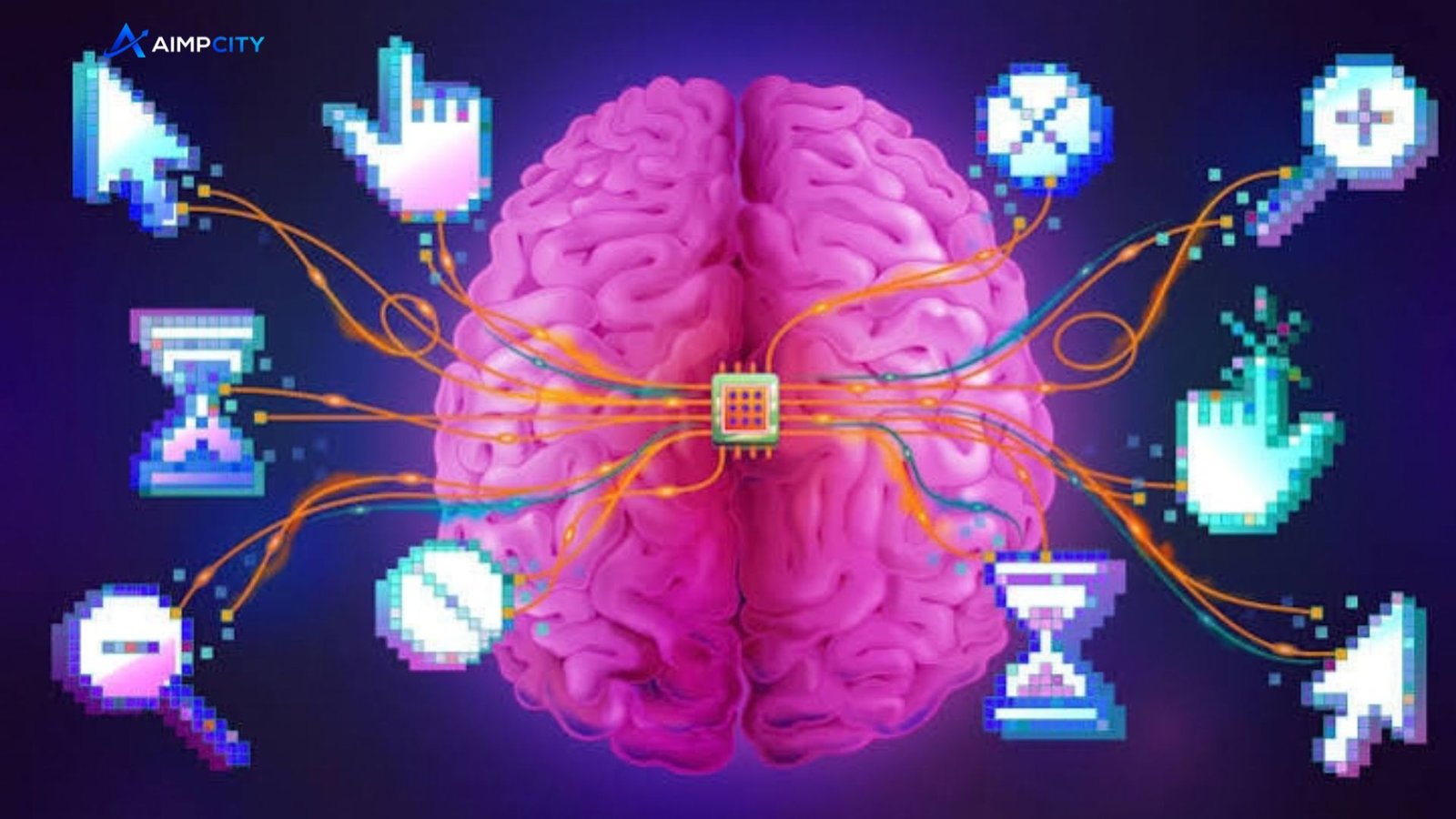
A brain computer interface (BCI) creates a communication pathway between brain activity and an external computer or device. Instead of relying entirely on muscles, speech, or conventional controls, a person can use measurable neural signals to operate software, prosthetic limbs, communication tools, or other technology.
Research is moving beyond laboratory demonstrations toward practical medical applications, particularly for people with paralysis or severe communication disabilities. However, most advanced systems remain experimental, and major challenges involving safety, reliability, cost, data privacy, and long-term use still need to be addressed.
What Is a brain computer interface?
A brain computer interface is a technology that records or interacts with brain activity and uses computing systems to interpret or respond to those signals. The terminology varies across research fields, but modern definitions increasingly treat both implanted and non-implanted systems as BCIs.
The basic process has three stages:
- Signal acquisition: Sensors detect electrical, magnetic, optical, or other measurable brain activity.
- Signal processing: Software filters and analyzes the raw neural information.
- Output: A decoder converts relevant patterns into commands for a computer, robotic device, communication system, or other application.
Some systems are designed only to record brain activity, while more advanced approaches can create closed-loop systems that both interpret neural signals and deliver stimulation.
How does a brain computer interface work?
The technology depends heavily on how brain activity is measured.
Non-invasive BCIs use equipment outside the skull. Electroencephalography (EEG), for example, measures electrical activity through electrodes placed on the scalp. These approaches avoid brain surgery but generally provide less precise access to individual neural signals.
Implanted BCIs use electrodes or other sensors placed inside or near the brain. They can capture neural activity with greater specificity, potentially allowing more detailed control. The trade-off is greater medical complexity because implantation involves surgery and long-term device management.
Machine-learning algorithms are often used to decode patterns in neural data. The system does not simply “read thoughts” in the everyday sense. Instead, it learns relationships between measured brain signals and specific intended actions, such as attempting to move a cursor or produce speech.
What can the technology control?
Depending on the system and research objective, neural signals may be translated into commands for:
- Computer cursors and software
- Robotic arms and prosthetic devices
- Speech or text-generation systems
- Assistive communication interfaces
- Neurostimulation systems
- Experimental sensory-feedback technologies
Researchers have demonstrated communication systems that translate neural activity associated with attempted speech into audible or written language. NIH reported in 2025 on research aimed at producing more natural speech for people who had lost the ability to speak because of paralysis.
Major applications of brain computer interface technology
Medical rehabilitation is one of the most significant areas of BCI research. The technology could help restore forms of independence for people affected by spinal cord injury, stroke, neurodegenerative disease, or other neurological conditions.
| Application | Potential role | Current position |
|---|---|---|
| Communication | Convert intended speech or movement into text or synthesized speech | Active research |
| Motor assistance | Control robotic arms, cursors, or assistive devices | Experimental and clinical research |
| Rehabilitation | Support training after neurological injury | Research area |
| Sensory restoration | Provide artificial sensory feedback | Early-stage research |
| Neurostimulation | Use decoded brain states to guide stimulation | Emerging research |
Another area involves neuropsychiatric conditions. Researchers are investigating closed-loop systems that detect neural patterns associated with symptoms and use that information to personalize stimulation. This remains a research field rather than a broadly established treatment approach.
Benefits and limitations
The most compelling benefit of a brain computer interface is its potential to create an alternative route for communication or control when conventional muscle-based pathways are impaired.
For someone unable to move a hand, for example, a suitable system could potentially translate neural activity associated with intended movement into commands for a computer or robotic device. NIH describes this broader goal as accessing voluntary intent, decoding neural activity, and connecting the resulting commands to assistive technology.
The limitations are equally important. Implanted systems can require surgery, specialized equipment, calibration, and long-term medical support. Researchers also face problems involving signal stability, hardware durability, wireless data transmission, and differences between users.
💡 Pro Tip: When evaluating a BCI claim, separate a laboratory demonstration from an approved medical product. Ask whether the system has been tested in humans, how many participants were involved, whether results lasted over time, and what regulatory status applies.
Is a brain computer interface available to the public?
Availability depends on the type of system and its intended use. Consumer neurotechnology can measure certain forms of brain activity without surgery, but these products should not automatically be treated as equivalent to implanted clinical BCIs.
Advanced implanted systems are still largely being investigated through clinical research. A 2025 review of implanted BCI trials identified 28 clinical trials involving 67 implanted participants across research groups between 1998 and 2023, highlighting both substantial progress and the limited scale of the evidence base.
This distinction matters because impressive demonstrations in a small research study do not necessarily establish safety, effectiveness, affordability, or reliability for widespread clinical use.
Privacy, safety, and ethical questions
Neural data can reveal information about a person’s brain activity, making privacy a particularly important consideration. Questions include who owns recorded neural data, who can access it, how long it should be stored, and whether people can withdraw from a system without losing access to essential support.
Safety is another major concern for implanted devices. Surgery, infection risk, device failure, maintenance, and the long-term interaction between hardware and biological tissue all require careful evaluation.
Researchers have also raised concerns about equitable access and representation in clinical trials. The field’s development therefore involves more than improving electrodes and algorithms; regulatory standards, data governance, participant protection, and long-term support are also central issues.
📌 Key Takeaway: A brain computer interface is best understood as a developing communication and control technology, not a machine that simply reads unrestricted thoughts. Its strongest demonstrated potential is in restoring or supporting functions affected by neurological injury and disease, while safety, reliability, accessibility, and privacy remain major challenges.
Frequently Asked Questions
Can a brain computer interface read your thoughts?
Current BCIs do not provide unrestricted access to a person’s thoughts. They are designed to detect particular patterns of measurable brain activity and associate those patterns with specific tasks or intentions. Performance depends on the signals available, the decoder, the user, and the particular experimental setup.
Are brain computer interfaces safe?
Safety depends on the technology. Non-invasive systems avoid surgical implantation but have different signal-quality limitations. Implanted systems can provide more detailed neural information but introduce surgical and long-term device risks. Many advanced implanted technologies remain under clinical investigation rather than being established treatments.
Can BCIs help people with paralysis?
Yes, this is one of the major research goals. Studies have investigated systems that translate neural activity into commands for computers, robotic limbs, and communication devices. Speech restoration has also become an active research area, including systems designed to convert attempted speech into audible language.
What is the difference between a BCI and a brain implant?
A BCI is the broader technology that connects brain activity with computing or electronic systems. A brain implant is hardware placed inside the body. Therefore, a BCI can be non-invasive or implanted; not every BCI requires surgery. Modern research terminology increasingly emphasizes function rather than relying solely on the BCI-versus-BMI distinction.
Will BCIs become common in everyday life?
The long-term potential is significant, but widespread adoption is not guaranteed. Researchers still need to address reliability, usability, affordability, regulatory requirements, privacy, and long-term support. Current evidence supports continued development, particularly for medical applications, rather than assuming that advanced consumer applications are already mature.
Conclusion
A brain computer interface connects neural activity with digital systems to create new ways of communicating, controlling devices, and potentially restoring lost functions. The technology has produced meaningful research results in communication, movement, rehabilitation, and neurostimulation, but it remains a developing field.
For readers evaluating BCI technologies, the most useful question is not how futuristic a demonstration appears. It is how reliably the system works, in whom it has been tested, what risks it carries, and whether the technology has moved beyond experimental research into validated clinical use.
