

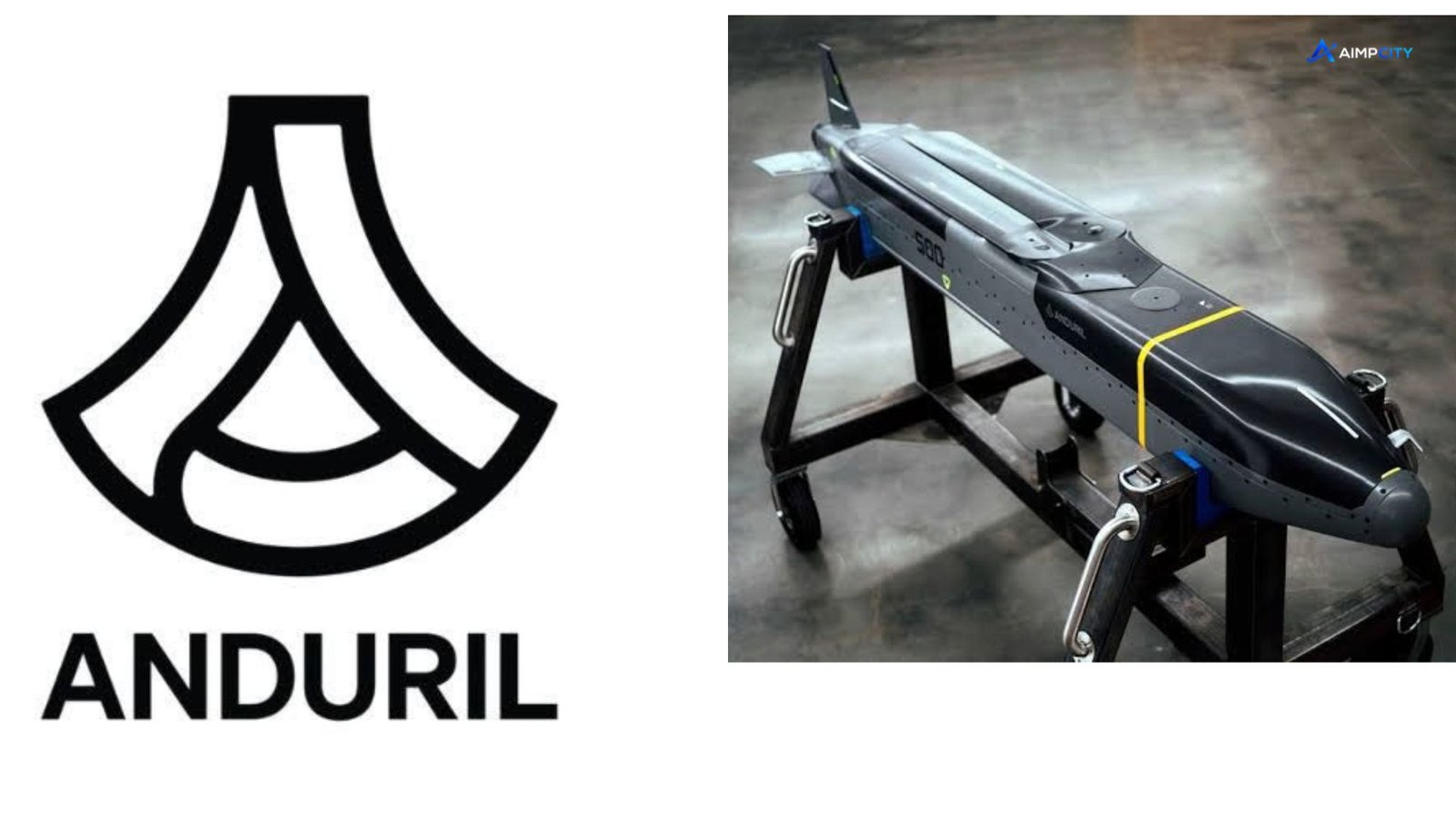
Anduril Industries is a U.S. defense technology company focused on autonomous systems, artificial intelligence, sensors, robotics, and software for military and national-security missions. Founded in 2017 by Palmer Luckey, the company has developed a business model centered on combining software with purpose-built hardware rather than treating defense equipment as isolated platforms.
Its technology now spans air, land, sea, and command-and-control applications. For readers researching the company, the key point is that Anduril is not simply a drone manufacturer: its broader strategy is to connect autonomous platforms and sensors through software, particularly its Lattice platform.
What Is Anduril Industries?
Anduril Industries describes itself as a defense technology company specializing in advanced autonomous systems. Its portfolio includes unmanned aircraft, counter-drone systems, electronic warfare equipment, autonomous underwater vehicles, and software for integrating information from multiple sensors and systems.
The company’s approach is strongly software-driven. Lattice functions as a command-and-control and autonomy platform designed to connect sensors, effectors, and other systems into a networked operational picture. Anduril says Lattice can integrate third-party and government-owned capabilities as well.
This architecture matters because modern defense operations increasingly involve large numbers of sensors and autonomous platforms. Instead of relying on a person to manually interpret every individual data stream, software can help organize information and support faster operator decisions.
Key Technologies and Products
The easiest way to understand Anduril Industries is to examine its major technology areas.
| Technology area | Examples | Primary purpose |
|---|---|---|
| Command and control | Lattice | Sensor integration, mission management and autonomy |
| Autonomous air systems | Roadrunner, Ghost, Fury, Barracuda | Reconnaissance, defense and other aerial missions |
| Counter-UAS | Anvil, Roadrunner, Pulsar | Detecting and countering drone threats |
| Undersea systems | Dive-LD, Dive-XL, Copperhead | Autonomous maritime operations and sensing |
| Electronic warfare | Pulsar | Detecting and responding to electromagnetic threats |
Anduril’s official portfolio shows how these categories overlap. Lattice provides the software layer, while autonomous platforms and sensors supply physical capabilities across different operating environments.
Roadrunner
Roadrunner is a reusable, vertical-takeoff-and-landing autonomous air vehicle. Anduril describes it as operator-supervised and equipped with twin turbojet engines and modular payload configurations. The Roadrunner-M variant is designed as an interceptor for ground-based air defense.
Counter-Drone Technology
The company’s counter-UAS portfolio includes Anvil and Roadrunner. Anvil is described by Anduril as an autonomous kinetic interceptor intended for Group 1–2 drone threats, while Roadrunner provides a reusable platform for a wider range of missions.
Undersea Systems
The maritime portfolio is another important part of the business. Anduril develops autonomous underwater vehicles for missions including sensing, inspection, surveillance, reconnaissance, and other maritime applications.
In March 2026, the Defense Innovation Unit and U.S. Navy selected the company for participation in the Combat Autonomous Maritime Platform project involving extra-large autonomous underwater vehicles.
💡 Pro Tip: When researching Anduril Industries, separate individual hardware products from the Lattice software ecosystem. The company’s broader proposition is based on connecting platforms, sensors, and decision-support capabilities rather than selling one standalone type of military vehicle.
Why Anduril Is Significant in Defense Technology
Anduril Industries has attracted attention partly because it approaches defense development more like a technology company. Its stated strategy emphasizes software, rapid development, autonomy, and manufacturing at scale. The company has also expanded its manufacturing ambitions, including its Arsenal-1 facility in Ohio.
Its private-market growth has also been substantial. Reuters reported in June 2025 that Anduril reached a $30.5 billion valuation following a $2.5 billion Series G funding round led by Founders Fund.
That valuation should not be confused with public-market capitalization: Anduril remains a privately held company, so its shares are not traded like those of a conventional publicly listed defense contractor.
The company has also expanded beyond the United States. In 2026, the British Army selected Anduril UK for the next phase of Project NYX, a program focused on autonomous collaborative platforms designed to operate alongside Apache attack helicopters.
How Anduril Compares With Traditional Defense Contractors
The distinction between Anduril Industries and established defense companies is primarily about development philosophy rather than a simple hardware comparison.
Traditional contractors often manage large, long-running programs involving extensive government requirements and established supply chains. Anduril emphasizes software-defined systems, autonomy, iterative development, and vertically integrated manufacturing.
That difference can create opportunities for faster technological development, but defense procurement remains complicated. Military systems must meet demanding requirements involving reliability, cybersecurity, testing, logistics, interoperability, and government certification.
There are also documented questions around cybersecurity and system integration. In 2025, Reuters reported on an internal U.S. Army assessment that raised security concerns about the NGC2 battlefield communications system involving Anduril, Palantir, and other partners. The companies disputed or contextualized aspects of those findings, illustrating why defense technology must be evaluated through testing and formal security processes rather than marketing claims alone.
📌 Key Takeaway: Anduril Industries is best understood as an integrated defense technology company combining autonomous hardware, sensors, artificial intelligence, and software. Its significance comes from the way those components are designed to work together across multiple military domains.
Frequently Asked Questions
What does Anduril Industries do?
Anduril develops defense technology including autonomous aircraft, underwater vehicles, counter-drone systems, electronic warfare equipment, sensors, and command-and-control software. Its Lattice platform is designed to connect and coordinate data and capabilities across these systems.
Who founded Anduril?
Palmer Luckey founded Anduril in 2017. Luckey is also known for founding Oculus, the virtual-reality company that became part of Meta. Anduril was created with a focus on applying modern software and autonomous technologies to defense.
Is Anduril Industries publicly traded?
No. Anduril is a privately held defense technology company, meaning its shares are not available on public stock exchanges in the same way as listed defense companies. Its reported private valuation therefore should not be interpreted as a stock-market capitalization.
What is Lattice?
Lattice is Anduril’s software platform for command and control, mission autonomy, and networking. The company says it can integrate sensors, effectors, and third-party or government-owned systems into an extensible network.
Does Anduril operate in the UK?
Yes. Anduril has a UK business, and in May 2026 the British Army announced that Anduril UK had been down-selected for the next phase of Project NYX involving autonomous collaborative platforms.
Conclusion
Anduril Industries occupies an increasingly visible position in the defense technology sector by combining autonomous vehicles, AI-enabled software, sensors, and manufacturing. Its portfolio reaches from counter-drone systems and aerial vehicles to electronic warfare and autonomous underwater platforms.
For anyone researching Anduril Industries, the most useful distinction is between individual products and the larger software-and-hardware ecosystem. Lattice, autonomy, networked sensors, and scalable manufacturing form the foundation of the company’s broader approach to defense technology.
