

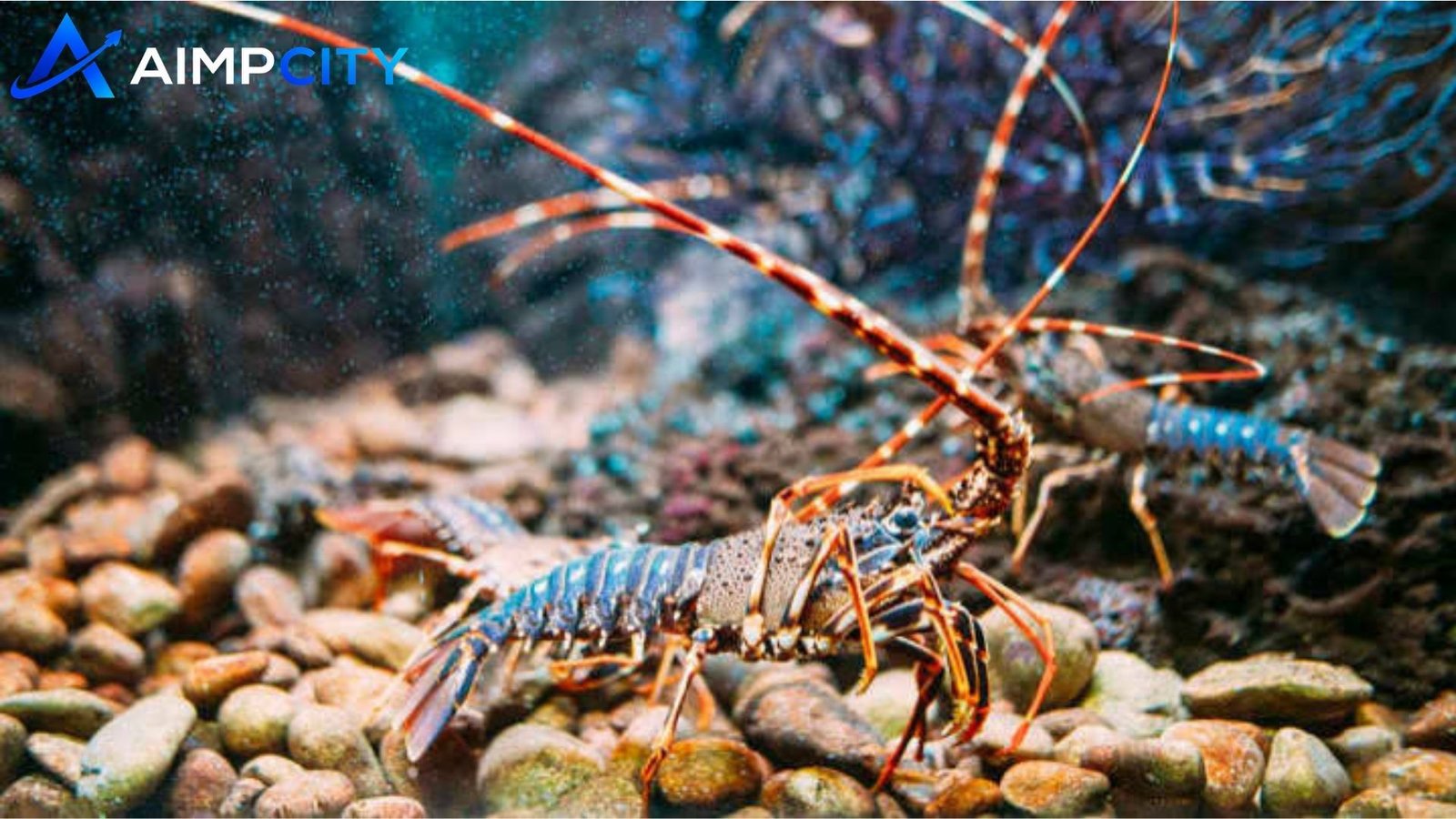
If you have ever watched Friends, you may remember Phoebe calling Ross and Rachel each other’s “lobsters,” suggesting that lobsters choose one partner and stay together for life. It is a sweet idea, and it helped turn the lobster into a pop-culture symbol of lasting love. But biologically, the story is very different.
So, do lobsters mate for life? No. Lobsters do not form lifelong romantic partnerships, and they generally do not remain with the same mate permanently. A female lobster may mate with one male during a particular reproductive period, but she can choose a different male during a later cycle.
Do Lobsters Really Mate for Life?
No, lobsters do not mate for life.
Most lobsters are essentially solitary animals rather than bonded couples. A male and female may spend several days together during mating, but they eventually separate and return to their normal lives.
The confusion largely comes from popular culture rather than marine biology.
Female lobsters usually seek out a suitable male when they are ready to molt and reproduce. The male is often a large, dominant individual occupying a desirable shelter. After mating, the female eventually leaves.
During her next reproductive cycle, she may return to the same male if he remains dominant, but there is no permanent pair bond.
A simple comparison makes the difference clearer:
| Behavior | Lobsters | Lifelong Pair-Bonding Animals |
|---|---|---|
| Permanent partner | No | Often |
| Live together continuously | No | Sometimes |
| Same mate every breeding season | Not necessarily | Often |
| Raise offspring together | No | Often |
| Temporary mating association | Yes | Yes |
Lobster reproduction is therefore better described as temporary mating behavior rather than lifelong partnership.
How Do Lobsters Choose a Mate?
The mating process begins before physical mating occurs.
Female American lobsters often look for dominant males living in strong shelters. Size, strength, and social position can influence which male attracts females.
Lobsters are surprisingly competitive animals.
Males may fight over shelters, and the strongest male in an area can gain access to mating opportunities with several females.
A female approaching a male’s shelter does not simply walk inside immediately. Chemical communication plays an important role.
Lobsters detect chemicals in the water through sensory structures on their bodies. These chemical signals can provide information about reproductive condition and identity.
Researchers studying lobster behavior have observed females repeatedly approaching dominant males before mating.
This means mate choice is not completely random.
Female Lobsters May Actively Choose Dominant Males
One of the more interesting parts of lobster reproduction is that female choice appears to matter.
A female may visit a dominant male’s shelter repeatedly before staying with him.
Dominance can provide an advantage because a male controlling a secure shelter may offer temporary protection during the female’s most vulnerable stage: molting.
This creates an important distinction.
The female is not necessarily choosing a permanent partner. She is selecting a suitable male for a specific reproductive opportunity.
What Happens When Lobsters Mate?
Lobster mating is closely connected to molting.
Because lobsters have hard external skeletons, females generally need to shed their shells before successful mating can occur.
The sequence usually looks something like this:
- A receptive female approaches a suitable male.
- She spends time around or inside his shelter.
- The female molts, shedding her hard outer shell.
- While her new shell remains soft, mating occurs.
- The male transfers sperm to the female.
- The female remains sheltered while her new shell hardens.
- Eventually, she leaves.
The temporary shelter arrangement may last several days.
During this period, the male can provide some protection while the female’s soft body is particularly vulnerable to predators and other lobsters.
Once her shell becomes stronger, however, there is generally no reason for the pair to remain together.
Why Lobsters Do Not Form Lifelong Couples
Their lifestyle helps explain why lifelong mating would provide little biological advantage.
Adult lobsters tend to live independently.
They spend much of their time:
- hiding inside rocky shelters
- searching for food
- defending territory
- avoiding predators
- competing with other lobsters
Unlike animals that cooperate to build nests or raise young, male and female lobsters do not need to remain together after mating.
The female handles reproduction largely by herself.
She stores sperm, fertilizes her eggs and carries developing eggs beneath her abdomen without help from the male.
There is therefore little evolutionary pressure for permanent couples to form.
Can a Female Lobster Mate With More Than One Male?
Yes, over her lifetime a female lobster can mate with multiple males.
She may mate with one dominant male during one reproductive cycle and another male during a future cycle.
A particularly successful male may also mate with several females.
This creates a reproductive system that is very different from monogamy.
However, there is an interesting detail that often gets overlooked.
During a particular reproductive period, a female may remain associated with one male long enough to molt and mate safely.
From a human perspective, that temporary cohabitation can look surprisingly couple-like.
Biologically, however, it is a short reproductive partnership rather than a lasting relationship.
Female Lobsters Can Store Sperm for Months
One remarkable feature of lobster reproduction is sperm storage.
After mating, fertilization does not always happen immediately.
The female can keep sperm inside a specialized storage structure until conditions are suitable for fertilizing her eggs.
This reproductive delay gives the female considerable control over timing.
When the eggs are eventually released, stored sperm can fertilize them.
The fertilized eggs then become attached beneath the female’s abdomen.
This creates a useful biological separation between three events:
mating → sperm storage → egg fertilization
They do not necessarily happen at the same time.
That distinction is one reason lobster reproduction is more complex than the popular “two lobsters fall in love forever” story suggests.
How Many Eggs Can a Lobster Carry?
A female lobster can carry thousands of eggs beneath her tail.
Larger females generally produce considerably more eggs than smaller females.
Depending on her size, species and reproductive condition, a female may carry anywhere from several thousand to tens of thousands of eggs.
The eggs remain attached to swimmerets under her abdomen while they develop.
During this period, the female regularly moves water around the eggs.
She may carry them for many months before they hatch.
Fishermen sometimes call a female carrying visible eggs a berried lobster, because the egg masses underneath her tail can resemble small berries.
Do Male Lobsters Help Raise the Babies?
No.
Lobsters do not practice parental care as a couple.
The male’s reproductive involvement largely ends after sperm transfer.
The female carries the eggs until they hatch, but even she does not raise the young afterward.
Once hatched, lobster larvae enter the water and begin an independent life.
Young lobsters face extremely high mortality because many are eaten by fish and other predators before they reach adulthood.
Producing large numbers of eggs helps compensate for those losses.
Do Lobsters Stay Together After Mating?
Usually not.
After the female’s shell hardens sufficiently following her molt, she leaves the male’s shelter.
The two animals then resume largely independent lives.
A female could encounter the same male again in the future, particularly if he continues to control a high-quality shelter in her area.
But returning to the same individual should not be confused with a permanent pair bond.
Think of it more as repeatedly selecting a successful reproductive partner rather than maintaining a relationship.
The Famous “Lobster Mate for Life” Myth
The idea that lobsters mate for life became especially popular because of the television show Friends.
In one well-known scene, Phoebe describes lobsters as animals that fall in love and stay together permanently.
The moment became culturally memorable.
Eventually, expressions such as:
- “You’re my lobster”
- “I found my lobster”
- “Be my lobster”
became shorthand for soulmate relationships.
It works wonderfully as a romantic metaphor.
It just does not work as zoology.
Real lobsters are primarily solitary animals with temporary reproductive associations.
A More Interesting Truth: Lobster Relationships Are Strategic
One detail frequently missing from simplified explanations is that lobster mating behavior involves much more than merely finding the nearest member of the opposite sex.
Shelter quality, dominance, chemical signaling, molting and timing can all affect reproductive interactions.
A dominant male controlling a desirable shelter may receive visits from multiple females.
From an evolutionary perspective, this arrangement makes sense.
The female gains access to a protected environment during the dangerous period immediately after molting, while the male gains reproductive opportunities.
It is less like human romance and more like a temporary biological partnership in which both animals gain reproductive benefits.
Three Surprising Insights About Lobster Mating
1. The Most Important Part May Happen Before Mating
The female’s interactions with males before molting can influence reproductive success.
Finding a suitable shelter and male before losing her hard shell matters because freshly molted lobsters are extremely vulnerable.
Timing and environment therefore play an unusually important role.
2. One Successful Male May Mate With Several Females
Lobster mating systems can reward social dominance.
A male occupying a valuable shelter can attract multiple receptive females over time.
So instead of permanent couples living throughout an area, several females may independently choose the same successful male.
3. Female Lobsters Control Reproductive Timing
Because sperm can be stored after mating, fertilization does not have to occur immediately.
That means mating and egg production can be separated in time.
This ability can help synchronize reproduction with the female’s biological condition rather than forcing fertilization immediately after mating.
Common Misunderstandings About Lobster Reproduction
Several myths are often repeated online.
“Lobsters have one soulmate.”
They do not. Individual lobsters may have multiple mates during their lives.
“Lobsters stay together permanently.”
They typically separate after mating and the female’s shell recovery.
“Both parents raise baby lobsters.”
They do not. The female carries eggs, while the male provides no parental care after mating.
“Every mating immediately produces babies.”
Not necessarily. Females can store sperm before fertilizing eggs.
“Returning to the same male means monogamy.”
A female might choose the same successful male again, but that does not create a lifelong pair bond.
What Animals Actually Mate for Life?
True lifelong monogamy is relatively unusual in the animal kingdom.
Some species are known for forming strong long-term pair bonds, although even those relationships are not always perfectly lifelong.
Examples often include:
- albatrosses
- some swans
- certain penguin species
- beavers
- some gibbons
- wolves
These animals often benefit from cooperation between partners.
For example, raising offspring may require both parents to defend territory, obtain food or protect young.
Lobsters face a very different reproductive situation.
Because lobster offspring receive virtually no two-parent care, maintaining a permanent mate provides much less advantage.
Conclusion
So, do lobsters mate for life? The scientific answer is no.
Lobsters may temporarily share a shelter during reproduction, and a female may even return to a successful male during another breeding cycle. But these interactions do not form the kind of permanent pair bond seen in genuinely monogamous animals.
Frequently Asked Questions
Do lobsters mate with the same partner every year?
Not necessarily. A female may mate with the same dominant male during another reproductive cycle if he remains nearby and continues to occupy a suitable shelter. However, she can also select a different male. Lobsters do not maintain exclusive lifelong partnerships.
Why do people say lobsters mate for life?
The idea became widely known through popular culture, particularly the “lobster” soulmate reference in Friends. It sounds romantic, so the claim has been repeated frequently in cards, gifts and relationship sayings. Scientific observations of lobster behavior do not support the idea of lifelong pair bonding.
How often do lobsters mate?
Mating frequency depends on species, age, size, molting cycle and reproductive condition. Female lobsters generally reproduce according to cycles connected closely with molting and egg development. They do not continuously seek mates throughout the year.
Can female lobsters store sperm after mating?
Yes. Female lobsters can store sperm after mating and use it later when their eggs are ready for fertilization. This means mating and fertilization can occur at different times. It is one of the most fascinating aspects of lobster reproduction.
Do lobsters stay together while the female is pregnant?
No. After mating and recovering from molting, the female generally leaves the male. She later carries fertilized eggs beneath her abdomen without assistance from him. The pair does not remain together to raise offspring.
Are lobsters monogamous?
Lobsters are not considered monogamous in the usual biological sense. Both males and females can have different reproductive partners over their lifetimes. A dominant male may also mate with multiple females during reproductive periods.
