

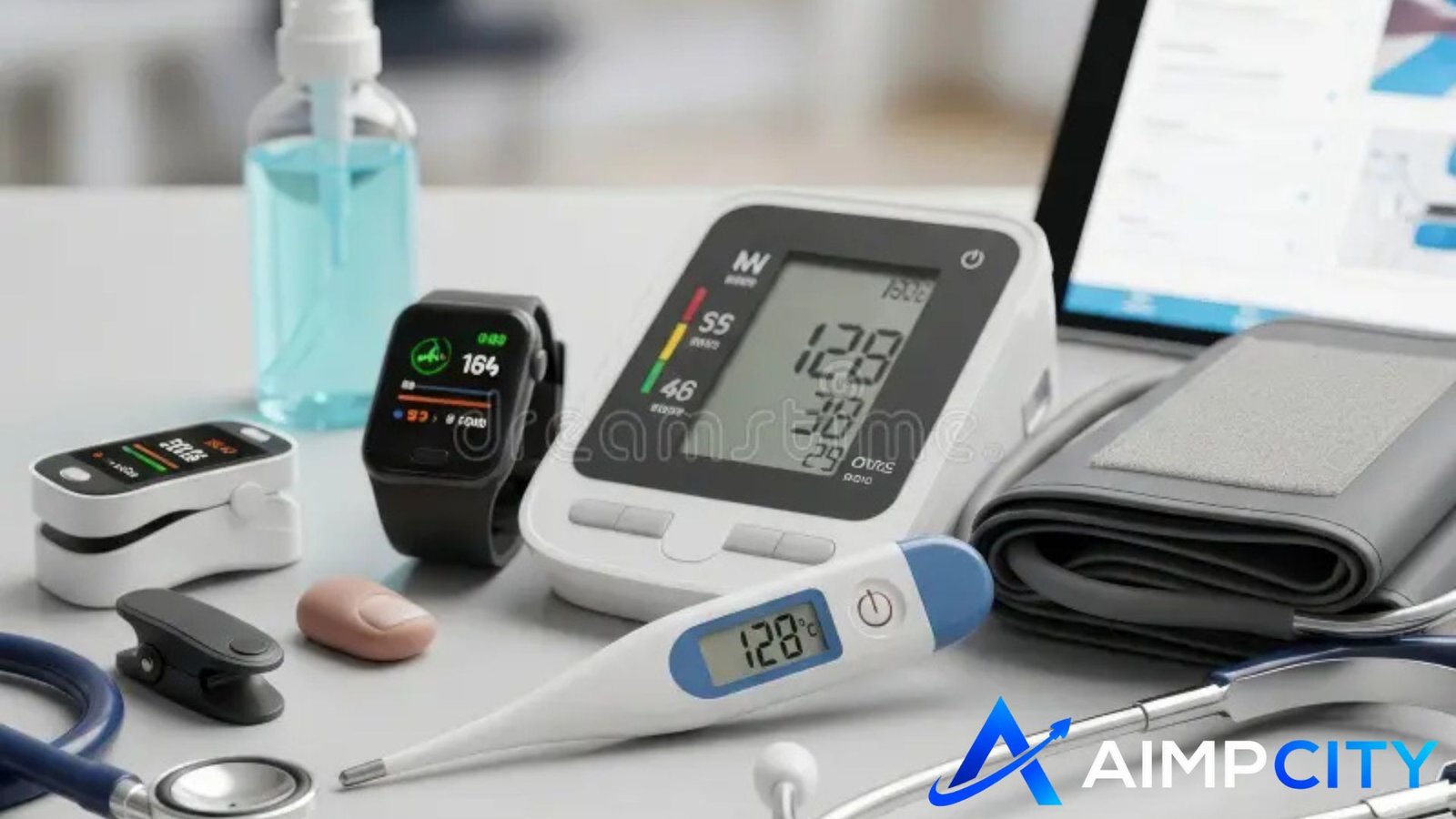
You wake up feeling exhausted, check your smartwatch, and see a “Sleep Score” of 84/100. The app claims you are fully restored, but your groggy head and aching joints say otherwise.
This disconnect highlights the core issue with the modern health tech landscape: most health gadgets generate piles of data, but very few deliver actionable, life-enhancing value.
Between sleek rings, smart scales, continuous biosensors, and ambient sleep monitors, separating gimmick from genuine medical utility requires looking past slick marketing. Health gadgets should not turn you into an anxious quantified-self obsessive; they should seamlessly sit in the background, working to solve specific health friction points like chronic fatigue, silent inflammation, or recovery tracking.
The Shift From Tracking to Predictive Action
The early generation of wellness tech focused almost exclusively on vanity metrics: steps walked, active calories, and arbitrary sleep points.
The latest generation of health devices marks a shift from reactive tracking to proactive guidance. Modern sensors rely on Edge AI processing physiological data locally on your device in real time rather than uploading raw streams to a cloud server hours later.
  Traditional Wearables (Reactive)
  [ Raw Data ] ──> [ Cloud Processing ] ──> [ Daily Summary (Historical) ]

  Modern Health Gadgets (Proactive)
  [ Continuous Sensing ] ──> [ On-Device Edge AI ] ──> [ Immediate Actionable Insight ]
Instead of simply telling you that your Heart Rate Variability (HRV) tanked last night, a proactive system cross-references your basal body temperature, respiratory rate, and resting heart rate. It alerts you to impending immune strain hours before your first sneeze, allowing you to prioritize rest before symptoms force you to take time off.
Top Health Gadget Categories That Deliver Real Value
1. Smart Rings & Screenless Trackers
For users who experience screen fatigue or find notification-heavy smartwatches distracting, screenless form factors offer a subtle alternative.
- Primary Use Case: Continuous sleep stage mapping, overnight temperature delta, and daily readiness scoring.
- Key Benefit: Worn on the finger where blood vessels sit closer to the surface, smart rings offer improved signal-to-noise ratio for optical heart rate and arterial pulse wave readings.
- Best Fit: Individuals who want comprehensive recovery data without daily charging or wrist clutter.
2. Multi-Frequency Smart Scales & Segmental Analyzers
Standard bathroom scales measure total weight, which fluctuates wildly based on hydration, glycogen storage, and salt intake. Multi-frequency bioelectrical impedance analysis (BIA) scales send low and high-frequency electrical currents through the body to isolate muscle mass, visceral fat, and fluid distribution across individual limbs.
- Primary Use Case: Tracking composition changes during targeted training or fat loss protocols.
- Key Benefit: Identifies dangerous shifts in visceral fat (fat around internal organs) even when your overall weight stays static.
- Best Fit: Anyone undertaking body recomposition, post-injury rehabilitation, or metabolic health monitoring.
3. Continuous Glucose Monitors (CGMs) for Non-Diabetics
Once restricted strictly to clinical diabetes management, non-prescription continuous glucose sensors are now widely available for metabolic optimization.
- Primary Use Case: Real-time visibility into postprandial (after-meal) blood sugar spikes, glycemic variability, and insulin sensitivity trends.
- Key Benefit: Reveals individual responses to specific foods showing how two people can eat identical meals yet experience vastly different blood sugar responses.
- Best Fit: Individuals managing metabolic health, energy slumps, or pre-diabetic risk factors under proper professional context.
| Device Category | Primary Metric | Battery Life | Best Used For |
| Smart Rings | HRV, Skin Temp, Sleep Stages | 5–7 Days | Invisible recovery & sleep tracking |
| Smart Watches | ECG, SpO2, Live GPS, Workouts | 1–2 Days | Daytime activity & real-time alerts |
| CGM Biosensors | Real-time Interstitial Glucose | 10–14 Days | Metabolic optimization & diet response |
| Targeted Light Therapy | Local Blood Circulation, ATP Production | Corded/Rechargeable | Targeted joint/muscle recovery & skin health |
Real-World Case Study: Fixing Chronic Fatigue
Consider a practical example of how combining targeted health tech can identify hidden issues rather than just displaying static numbers.
Scenario: A user suffers from persistent afternoon energy crashes, morning brain fog, and stagnating workout recovery, despite sleeping 8 hours a night.
- Week 1 (Data Baseline): The user pairs a smart ring with a continuous glucose monitor (CGM). The ring reveals a consistent delay in deep sleep onset, while overnight HRV remains suppressed.
- Week 2 (Identifying Patterns): Cross-referencing CGM data shows a severe blood sugar spike following an 8:00 PM carbohydrate-heavy dinner, followed by a reactive glucose crash at 2:00 AM.
- The Root Cause: The mid-night glucose crash triggers a spike in adrenaline and cortisol, disrupting deep sleep cycles without fully waking the user up.
- The Intervention: The user shifts their last meal two hours earlier and swaps high-glycemic carbohydrates for complex fibers and protein.
- The Outcome: The 2:00 AM glucose crash vanishes, deep sleep duration increases by 42 minutes, and afternoon brain fog drops significantly within 10 days.
Three Insights Most Tech Reviews Miss
1. Optical PPG Sensors Fail During Rapid Motion
Most consumers assume wrist or finger-based heart rate sensors work like clinical ECGs. They do not. Smartwatches and smart rings use photoplethysmography (PPG) shining light into your capillaries to measure volume changes with every beat.
During rapid movement (such as kettlebell swings, heavy lifting, or sprinting), light leakage and muscle contraction artifacts degrade the signal. For high-intensity interval training or strength sessions, a chest strap utilizing electrical impulses (ECG) remains necessary for reliable data.
2. The “Measurement Strain” Psychological Loop
Tracking every breath, heart rate spike, and sleep score can trigger an unintended psychological issue: Orthosomnia an unhealthy obsession with achieving perfect sleep and health metrics.
When users wake up feeling fine but see a low readiness score, their stress levels often spike, causing actual physiological fatigue. The most effective approach is treating health tech as a periodic diagnostic tool wearing devices for 30–60 days to audit lifestyle habits, then stepping away rather than monitoring every second of every day.
3. Biological Calibration Lag
When you unbox a new bio-sensor, the first 14 days of data are virtually useless for daily decisions. Smart algorithms require a personal baseline to learn your unique circulatory rhythms, resting heart rate, and hormonal shifts. Making sudden changes to your routine based on your first three days of device data often leads to counterproductive adjustments.
Common Mistakes When Purchasing Health Tech
- Buying without clear objectives: Purchasing a device because it looks sleek, rather than identifying a specific health problem to solve (e.g., poor sleep, irregular blood pressure, training fatigue).
- Ignoring ongoing subscription fees: Many modern wearables sell hardware cheap but lock essential analytics and AI coaching behind monthly paywalls. Factor total lifetime cost before buying.
- Over-relying on gadget diagnoses: Treating consumer health gadgets as substitutes for clinical bloodwork or professional medical care. Wearables are early-warning screening tools, not diagnostic instruments.
- Neglecting device fit: Wearing optical sensors too loosely on the wrist or finger, leading to inaccurate readings and skewed baselines.
Conclusion:
The true power of health gadgets lies in revealing your unique biological baselines. They remove the guesswork from nutrition, sleep, and physical recovery.
Instead of buying every new sensor that enters the market, identify your biggest health bottleneck. Choose a single tool tailored to that goal, gather data for 30 to 60 days, and focus on simple lifestyle fixes before adding more tech to your routine.
Frequently Asked Questions
Do health gadgets really improve your long-term health?
Health gadgets only improve your health if they drive actual lifestyle adjustments. The data itself does not burn calories, lower cortisol, or optimize sleep architecture. A device is useful only when it helps you identify a clear health pattern like a specific food causing inflammation or a late schedule ruining deep sleep and prompts you to change that behavior.
What is the single most accurate health metric to track on wearables?
Heart Rate Variability (HRV) during sleep is widely considered the most reliable metric for tracking physical recovery and autonomic nervous system balance. Unlike basic heart rate, HRV measures the microscopic time variations between consecutive heartbeats, giving a direct snapshot of how well your body is balancing stress and rest.
Are smart rings as accurate as smartwatches for daily health tracking?
For overnight monitoring, heart rate variability, and skin temperature, smart rings are often as accurate as or more accurate than smartwatches. The blood vessels in the fingers are closer to the surface, and rings fit snugly without sliding around during sleep. However, smartwatches remain superior for live workout tracking, GPS mapping, and mid-exercise visibility.
Can continuous glucose monitors (CGMs) help non-diabetics lose weight?
CGMs can indirectly support weight loss by showing how specific foods trigger rapid blood sugar spikes and subsequent energy crashes. By helping you choose foods that keep blood glucose stable, CGMs reduce sudden hunger spikes and energy dips. However, weight loss still depends on your overall energy balance, not blood sugar control alone.
