

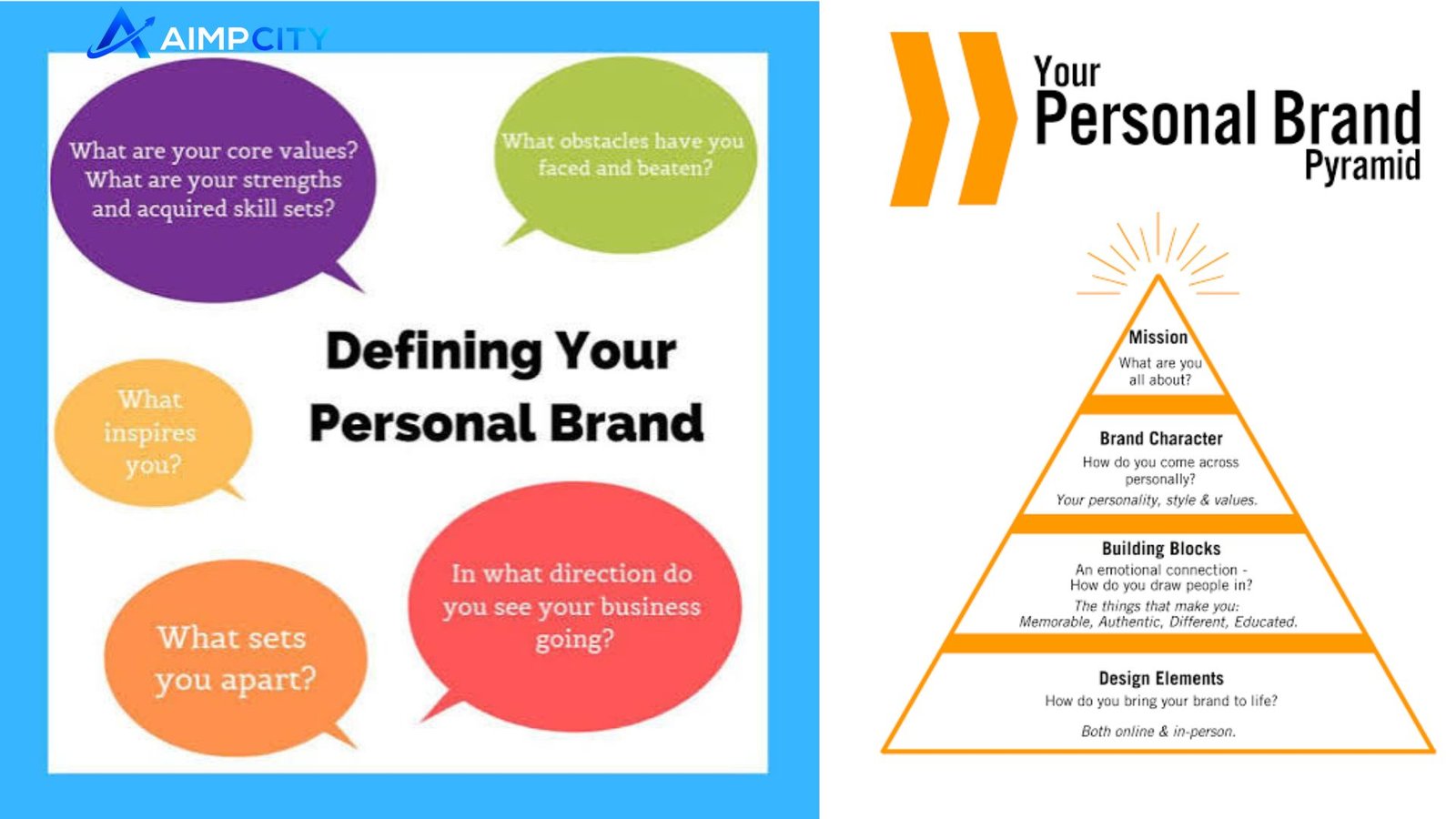
Personal branding is the deliberate process of shaping how people understand your skills, expertise, values, personality, and professional value. It is not simply having a polished LinkedIn profile or posting regularly on social media. It is the reputation and professional identity you consistently communicate through your work, behavior, communication, and public presence.
The American Marketing Association describes personal branding as promoting yourself, your experiences, career, and distinctive qualities as a brand. Harvard Business School similarly frames it as the intentional practice of defining and expressing your value.
What Is Personal Branding?
At its simplest, personal branding answers one question: What do you want to be known for?
Your answer might involve a profession, a particular skill, a point of view, or the type of problems you solve. For example, a marketing professional might become known for practical content strategy, while a software developer could build a reputation around accessible explanations of complex technology.
Your personal brand is not entirely what you claim about yourself. It also includes what other people consistently experience and remember about you. That distinction matters because reputation is formed through repeated interactions, results, communication, and visible behavior—not slogans alone.
Harvard Business Review notes that people already form impressions of us through everyday interactions, professional relationships, interviews, promotions, and online activity. Personal branding gives you a more deliberate role in shaping that narrative.
Why Personal Branding Matters
A strong personal brand can make your professional value easier to recognize.
Consider two equally qualified professionals applying for a role. One has a clear area of expertise, a consistent professional presence, useful work to show, and recommendations that reinforce the same strengths. The other has strong qualifications but little visible evidence of what makes them distinctive.
Personal branding can help bridge that gap by making your expertise easier for employers, clients, colleagues, journalists, collaborators, or prospective customers to understand.
It can also support:
- Career opportunities: A clear professional identity can help people associate you with particular skills or expertise.
- Credibility: Consistently demonstrating knowledge can strengthen professional trust.
- Networking: People have a clearer reason to remember and connect with you.
- Business development: Consultants, freelancers, founders, and creators can communicate what they offer without relying solely on company branding.
- Career transitions: A deliberate reputation can help you introduce yourself in a new field or position.
Personal branding does not guarantee a promotion, job, client, or business result. Its value is that it helps communicate your capabilities and direction more clearly.
The Core Elements of a Personal Brand
Effective personal branding usually rests on several connected elements rather than a single logo, profile, or social media account.
| Element | What it communicates | Example |
|---|---|---|
| Expertise | What you know or do well | SEO strategy |
| Values | What guides your decisions | Accuracy and transparency |
| Personality | How you communicate and work | Practical and approachable |
| Evidence | Proof of your capabilities | Projects, results, publications |
| Visibility | Where people encounter you | LinkedIn, website, events |
| Consistency | What people repeatedly associate with you | Clear focus on content strategy |
These elements should reinforce one another. A person who claims to specialize in data analysis but publishes thoughtful work about analytics, speaks about the subject professionally, and produces relevant projects creates a more coherent impression than someone who simply describes themselves as an expert.
💡 Pro Tip: Before changing your profile photo, colors, or social media design, write down three things you want people to associate with your name. Then review your bio, recent posts, portfolio, and professional conversations against those three ideas. If they send mixed signals, fix the message before polishing the visuals.
How to Build a Personal Brand
Building a personal brand is more useful when approached as an ongoing professional practice rather than a one-time marketing project.
1. Define your value
Start with your strongest combination of skills, experience, interests, and perspective. Ask yourself what problems you solve particularly well and who benefits from your work.
Avoid trying to appeal to everyone. A specific and credible position is usually easier to communicate than a vague claim such as “I help people succeed.”
2. Identify your audience
Your audience depends on your goals. A job seeker may focus on recruiters and hiring managers. A consultant may prioritize potential clients and industry peers. A founder may need to reach customers, partners, employees, and investors.
Knowing the audience helps you decide what expertise to demonstrate and where to communicate it.
3. Create evidence
Claims become more convincing when supported by visible work. Build a portfolio, publish useful articles, contribute to professional discussions, document projects, speak at relevant events, or share thoughtful analysis.
Your content does not need to make you appear extraordinary. It needs to demonstrate competence and give people a reason to remember you.
4. Keep your message consistent
Consistency does not mean repeating the same sentence everywhere. Your website, LinkedIn profile, professional introduction, portfolio, and public content should tell a compatible story.
For example, if you want to be recognized as a UX writer, your professional profiles should not primarily present you as a general marketer while your portfolio focuses on unrelated work.
5. Review and evolve
Your professional identity can change as your experience and goals change. Harvard Business Review’s research on personal branding emphasizes defining value, communicating it, building relationships, and periodically reassessing the brand as circumstances evolve.
A personal brand should therefore be consistent without becoming permanent. New skills, industries, responsibilities, and interests may require you to update how you present yourself.
Personal Branding vs. Reputation
Personal branding and reputation are closely related, but they are not identical.
Reputation is the perception other people have of you based on their experiences and information. Personal branding is the deliberate effort to define and communicate the value, identity, and qualities you want associated with you.
You can influence your brand, but you cannot completely control your reputation. Your actual behavior has to support the message.
That is why authenticity matters. Presenting yourself as an authority while consistently producing poor work creates a credibility problem. A sustainable professional identity connects what you communicate with what you actually deliver.
Common Personal Branding Mistakes
Many people make personal branding more complicated than it needs to be. Common problems include:
- Trying to appear like an expert in too many unrelated subjects.
- Focusing on follower counts instead of professional relevance.
- Copying another person’s tone, visual identity, or content strategy.
- Posting frequently without offering useful information.
- Making exaggerated claims that cannot be supported.
- Treating social media as the entire brand.
- Changing direction so often that people cannot understand what you do.
A smaller, relevant audience can be more valuable than a large audience that has no connection to your goals. Likewise, a professional reputation is built through many interactions, not through one viral post.
📌 Key Takeaway: The strongest personal brand is not the loudest one. It is the clearest match between what you are good at, what you consistently demonstrate, and what you want the right people to remember about you.
Frequently Asked Questions
Is personal branding only for influencers?
No. Personal branding is useful for employees, executives, freelancers, entrepreneurs, students, consultants, job seekers, and professionals in many industries. Anyone whose opportunities depend partly on how others understand their expertise can benefit from a clearer professional identity.
How do I create a personal brand with no followers?
Start with expertise rather than audience size. Define what you want to be known for, improve your professional profiles, publish useful work, participate in relevant communities, and build genuine professional relationships. A small network that recognizes your capabilities can provide more meaningful opportunities than a large but disconnected following.
What should a personal brand statement include?
A useful statement can explain who you are, what you do, whom you help, and what makes your approach distinctive. The American Marketing Association describes a personal brand statement as a short explanation of these core elements.
Does personal branding require social media?
No. Social media can increase visibility, but it is only one channel. Your reputation is also shaped by your work, communication, professional relationships, speaking engagements, publications, portfolio, and interactions with colleagues or clients. Choose channels that actually reach the people relevant to your goals.
Can a personal brand change over time?
Yes. Your professional identity should evolve as your experience, skills, interests, and objectives change. The key is to make changes deliberately and ensure your new positioning is supported by relevant evidence and consistent behavior.
Conclusion
Understanding what is personal branding starts with recognizing that your professional identity already exists in other people’s minds. You can leave it largely to chance, or you can deliberately communicate your strengths, values, expertise, and direction.
The most credible approach is not to manufacture an impressive persona. It is to make your real value easier to understand. Define what you want to be known for, demonstrate it through meaningful work, communicate consistently, and revisit your positioning as your career develops. Done well, personal branding becomes less about self-promotion and more about making your professional contribution clear.
