

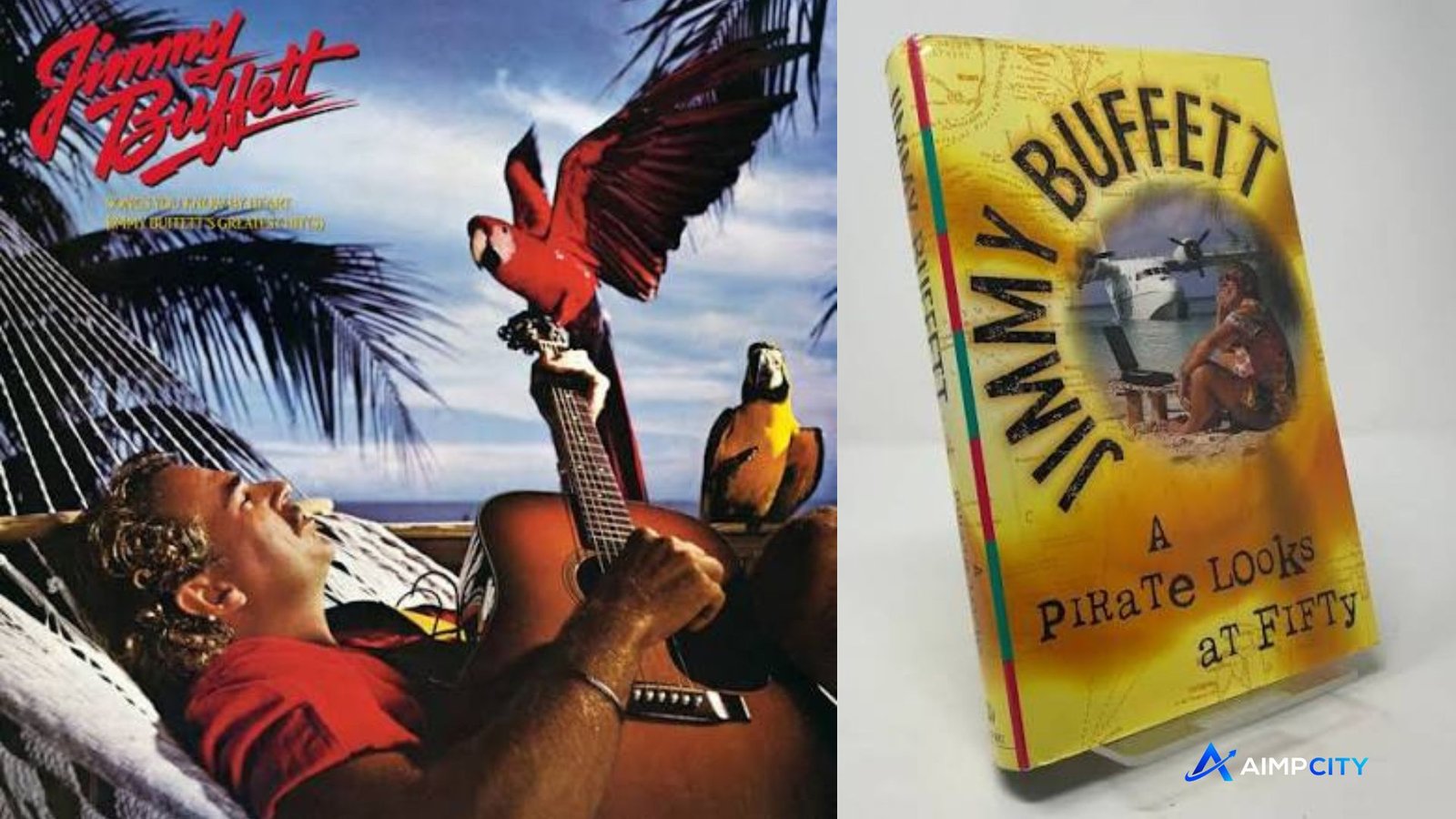
Jimmy Buffett A Pirate Looks at Forty is one of the most reflective songs in the singer-songwriter’s catalog. First released on Buffett’s 1974 album A1A, the song uses the image of an aging pirate to explore disappointment, freedom, nostalgia, lost opportunities, and the uneasy transition into middle age.
Although Buffett became strongly associated with tropical escapism and carefree coastal living, this song reveals a more complicated side of his songwriting. Beneath the nautical imagery is a character looking honestly at his life and wondering what comes next.
What Is Jimmy Buffett A Pirate Looks at Forty About?
At its heart, Jimmy Buffett A Pirate Looks at Forty is about a person whose youthful dreams have collided with reality.
The narrator imagines himself as a pirate born in the wrong era. The historical pirate lifestyle he romanticizes has already disappeared, leaving him feeling out of place in the modern world. That idea becomes a metaphor for anyone who feels that the life they imagined for themselves never quite materialized.
The song moves between humor and melancholy. References to drinking, failed relationships, drifting, and an uncertain occupation create the portrait of someone who has lived freely but has also reached a point of reckoning.
That combination is central to the song’s appeal. It does not present aging as a simple tragedy or as something to celebrate. Instead, Buffett portrays it as an uncomfortable mixture of memories, mistakes, freedom, and uncertainty.
The Story Behind the Song
Buffett’s official website identifies A Pirate Looks at Forty as a track from A1A, his 1974 album. The album also includes songs such as “Migration,” “Trying to Reason With Hurricane Season,” “Nautical Wheelers,” and “Tin Cup Chalice,” placing the song within the coastal and nautical world that became an important part of Buffett’s musical identity.
The song was inspired by Phillip Clark, a colorful character Buffett encountered during his early years in Key West. Buffett later described Clark as one of the memorable people he met when he first lived there. The story gives the song an unusual personal foundation: its fictional pirate persona grew from a real person and a real period in Buffett’s life.
That Key West connection matters because Buffett’s music was never only about beaches and cocktails. His songs frequently drew from people, places, travel, friendships, and unconventional characters. A Pirate Looks at Forty captures that storytelling tradition particularly well.
Why the age of forty matters
Forty is important because it represents a crossroads rather than simply a number.
The narrator looks backward at youthful choices while recognizing that time has moved on. His imagined identity as a pirate cannot survive unchanged, and his real-world lifestyle is becoming harder to sustain.
The result is a song about identity. Who are you when the dream that once defined you no longer fits?
| Element | What it represents |
|---|---|
| The pirate | A romanticized identity and lost ideal |
| The ocean | Freedom, memory, and lifelong longing |
| Forty | A moment of personal reckoning |
| Smuggling and drifting | A reckless, unconventional past |
| Fishing and friendship | Simpler sources of meaning |
| Key West atmosphere | The world behind Buffett’s early songwriting |
The Song’s Central Themes
Aging without pretending
Jimmy Buffett A Pirate Looks at Forty stands out because it does not make aging sound glamorous. The narrator recognizes his mistakes and limitations while still holding onto a sense of humor.
That honesty makes the song broader than its nautical setting. Listeners do not need to identify with piracy, sailing, or Key West to understand the feeling of reaching a milestone and wondering whether life has turned out as expected.
Freedom versus direction
Freedom is another major theme. The narrator has avoided conventional expectations, but independence has consequences. A life without a clear destination can eventually become a life without a clear sense of purpose.
Buffett does not provide a neat solution. Instead, the song leaves the character searching for a way forward.
💡 Pro Tip: Listen to the song as a character study rather than simply a beach-themed Buffett classic. Pay attention to the contrast between the narrator’s romantic idea of freedom and his growing awareness that freedom without direction can become isolation.
Humor alongside vulnerability
One reason Jimmy Buffett A Pirate Looks at Forty remains memorable is its balance of comedy and sadness. The exaggerated pirate persona gives Buffett room to discuss failure without making the song unbearably heavy.
That technique is particularly effective because the humor does not erase the sadness. It makes the sadness easier to recognize.
Why the Song Remains Important in Buffett’s Catalog
Jimmy Buffett A Pirate Looks at Forty helped establish a side of Buffett that could be overshadowed by his later party-oriented image.
Buffett’s official catalog continues to feature the song across compilations and live releases, demonstrating its lasting place in his repertoire. It appears, for example, in Songs You Know by Heart and later collections such as Boats, Beaches, Bars & Ballads.
The song also fits naturally beside Buffett’s broader body of work because it combines storytelling with his recurring fascination with the sea. Yet its emotional center is unusually personal.
Rather than selling an uncomplicated fantasy of paradise, Buffett shows what happens when someone realizes that the fantasy has limits.
How to Interpret Jimmy Buffett A Pirate Looks at Forty Today
Modern listeners can read the song in several ways.
For some, it is an anthem about reaching forty and questioning life’s direction. For others, it is a humorous portrait of someone who refuses to grow up in the conventional sense. Another interpretation sees the pirate as a symbol of any dream that arrived too late.
That flexibility is part of the song’s strength. Its central situation is specific, but its emotions are universal.
It also explains why the song can feel different at different ages. A younger listener may hear adventure and rebellion. Someone approaching forty may hear uncertainty. An older listener may focus more strongly on memory, consequences, and the passage of time.
📌 Key Takeaway: Jimmy Buffett A Pirate Looks at Forty is not simply a song about getting older. It is a character-driven reflection on what happens when youthful freedom, personal mistakes, and changing circumstances force someone to reconsider who they are.
Frequently Asked Questions
When was “A Pirate Looks at Forty” released?
Jimmy Buffett released “A Pirate Looks at Forty” on A1A in 1974. Apple Music lists the song and album with a December 1, 1974 date, while Buffett’s official site identifies it as track six on A1A.
Who inspired “A Pirate Looks at Forty”?
The song was inspired by Phillip Clark, whom Buffett met during his early years in Key West. Buffett later wrote that Clark was one of the unforgettable characters he encountered there, giving the song a real-life connection beneath its fictional pirate narrative.
What does the pirate symbolize in the song?
The pirate symbolizes a romanticized version of freedom and adventure that belongs to another era. More broadly, he represents someone who feels out of step with the world around him and is forced to confront the gap between youthful dreams and adult reality.
Is “A Pirate Looks at Forty” autobiographical?
It is not a straightforward autobiography. The song draws from Buffett’s experiences and his encounter with Phillip Clark, but it presents those influences through a fictionalized narrator. That blend of real-life inspiration and storytelling is a major part of its appeal.
Why is the song still popular?
Its enduring appeal comes from its combination of humor, melancholy, memorable imagery, and an easily recognizable theme: reaching a stage of life when past choices begin to look different. The nautical setting gives the song personality, while its reflections on aging make it relatable far beyond Buffett’s traditional audience.
Conclusion
Jimmy Buffett A Pirate Looks at Forty remains compelling because it captures something more complicated than the carefree lifestyle often associated with Buffett’s music. Its pirate is funny, flawed, restless, and uncertain, yet still searching for meaning.
That balance gives the song its lasting emotional power. More than five decades after its original release, it can still speak to anyone who has looked at the life they imagined, compared it with the life they actually have, and wondered where to sail next.
