

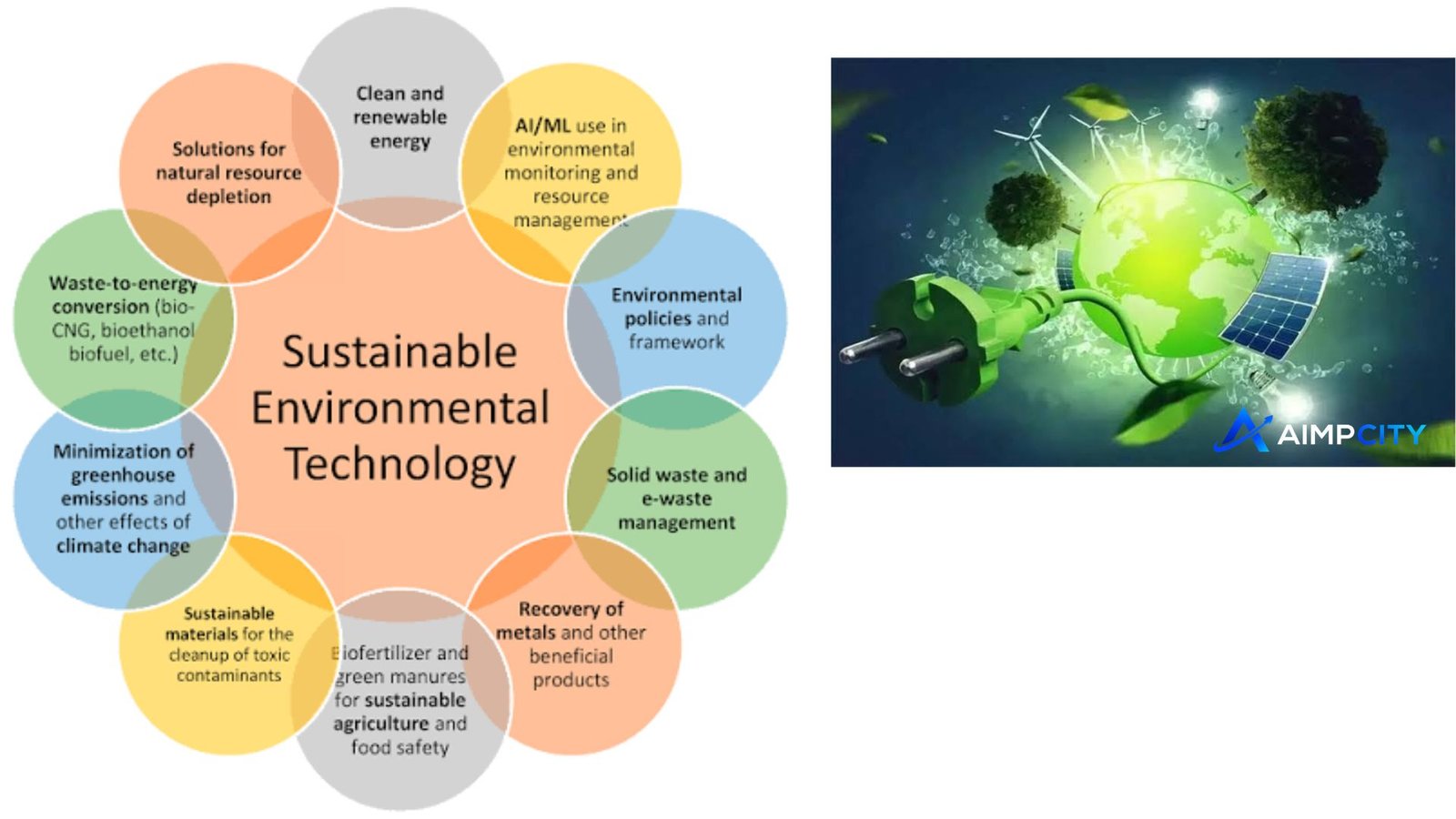
Sustainable technology refers to products, systems, and digital solutions designed to reduce environmental impact while delivering useful economic or social outcomes. From solar power and energy-efficient buildings to electric vehicles, smart grids, and circular manufacturing, sustainable technology is changing how energy and resources are produced and used.
For businesses, governments, and consumers in the USA and UK, the real question is not simply which technology is “green.” It is whether a solution reduces emissions, resource use, waste, or other environmental impacts across its lifecycle—and whether those benefits justify its costs and trade-offs.
What Is Sustainable Technology?
Sustainable technology is a broad term covering technologies that help conserve resources, reduce pollution, improve energy efficiency, support renewable energy, or make existing systems more resilient.
The concept extends beyond renewable power. The U.S. Environmental Protection Agency (EPA), for example, groups clean energy around renewable energy, energy efficiency, and efficient combined heat and power. The UK Government similarly approaches digital sustainability across emissions, resource use, waste, social value, transparency, and resilience.
That wider definition matters because a technology can have environmental benefits in one area while creating impacts elsewhere. Manufacturing, transportation, electricity consumption, maintenance, and end-of-life disposal can all affect its overall sustainability.
Key Examples of Sustainable Technology
Several technology categories are already playing important roles in the transition to lower-impact systems.
| Technology | Main sustainability benefit | Typical applications |
|---|---|---|
| Solar photovoltaic systems | Generate electricity without fuel combustion during operation | Homes, businesses, utility-scale projects |
| Energy-efficient equipment | Delivers the same service with less energy | Buildings, offices, factories |
| Electric vehicles | Can reduce tailpipe emissions and reliance on petroleum | Cars, buses, delivery fleets |
| Smart energy systems | Improve monitoring, flexibility, and energy management | Buildings, grids, industrial facilities |
| Battery storage | Stores electricity for later use | Renewable-energy systems, grids, EVs |
| Circular manufacturing | Keeps products and materials in use longer | Electronics, packaging, manufacturing |
Solar photovoltaic technology is particularly scalable because photovoltaic cells convert sunlight directly into electricity, although location, installation, economics, and environmental considerations still influence project suitability.
Digital technology also has a dual role. It can optimize energy use, support renewable-energy integration, monitor ecosystems, and improve climate resilience. At the same time, digital infrastructure consumes energy and materials, creating its own environmental footprint.
Energy Efficiency
Energy efficiency is often one of the most practical starting points. Using less energy to provide the same service can lower operating costs while reducing associated emissions.
For example, efficient lighting, heating and cooling equipment, data-center systems, and building controls can reduce unnecessary energy consumption. The EPA notes that energy efficiency can lower energy bills while reducing greenhouse-gas emissions and air pollution.
Circular Technology
Sustainability also involves what happens after a product has been manufactured and used.
A circular economy aims to keep products and materials in circulation for as long as possible. Strategies include repairing equipment, extending product lifespans, reusing components, designing for disassembly, and recovering valuable materials from discarded products.
This is particularly relevant to electronics, where rapid replacement can increase material demand and electronic waste.
💡 Pro Tip: When evaluating a technology purchase, ask for information about expected lifespan, repairability, energy consumption, software support, spare parts, and end-of-life recycling. A product that lasts substantially longer can be more sustainable than a newer model with marginally better efficiency.
Why Sustainable Technology Matters for Businesses
For organizations, sustainability is increasingly connected with operational efficiency and long-term resilience.
A company can use smart energy monitoring to identify inefficient equipment, renewable electricity to reduce dependence on fossil-fuel generation, and digital systems to optimize transportation or inventory. These measures can potentially reduce operating costs as well as environmental impacts.
Procurement decisions matter too. The UK Government advises organizations to consider sustainability throughout a technology project’s lifecycle, including whether equipment can be recycled or repurposed and whether unnecessary processing, transmission, or data storage can be reduced.
For larger organizations, supply-chain transparency is also becoming more important. A sustainable device is not truly sustainable simply because it uses less electricity during operation if its production, materials, or disposal create substantial unaddressed impacts.
Challenges and Limitations
Sustainable technology is not automatically sustainable in every context.
Manufacturing batteries, solar panels, electronics, and other advanced equipment requires raw materials, energy, transportation, and industrial processes. Renewable technologies can also have land-use or ecosystem impacts. The EPA notes, for example, that renewable-energy technologies can have environmental trade-offs even though they can offer major benefits compared with conventional energy sources.
Cost is another consideration. Some technologies require significant upfront investment before savings appear. Businesses therefore need to compare total lifecycle costs rather than looking only at the purchase price.
There is also the risk of “green” claims that focus on one benefit while ignoring the wider lifecycle. A credible assessment should consider energy use, materials, durability, maintenance, emissions, waste, and end-of-life management.
How to Choose Sustainable Technology
A practical evaluation can begin with five questions:
- What problem does the technology solve? Avoid buying equipment simply because it is marketed as green.
- How much energy and material does it require? Consider both operation and manufacturing.
- How long will it last? Durability can reduce replacement and disposal impacts.
- Can it be repaired, upgraded, reused, or recycled? Circular design can extend resource value.
- Can its environmental performance be measured? Look for credible certifications, technical documentation, lifecycle information, and transparent supplier claims.
For governments and large businesses, these questions can be incorporated into procurement policies and performance targets. The UK’s recent net-zero technology work also highlights areas such as sustainable batteries, renewable generation, energy-system digitalization, and improved infrastructure as important research and development priorities.
📌 Key Takeaway: The strongest sustainable technology decisions look beyond labels. Focus on measurable environmental performance, lifecycle impacts, durability, resource efficiency, and the technology’s actual usefulness in the system where it will operate.
Frequently Asked Questions
What is an example of sustainable technology?
Solar photovoltaic systems, energy-efficient appliances, electric vehicles, battery storage, smart building controls, and technologies that support material reuse are common examples. The right choice depends on the problem being addressed, because environmental benefits vary by location, energy source, manufacturing process, usage pattern, and product lifespan.
How does sustainable technology help the environment?
It can reduce energy consumption, greenhouse-gas emissions, waste, pollution, and demand for virgin resources. Some technologies also improve monitoring and resource management. However, benefits should be assessed across the lifecycle because manufacturing, transportation, operation, and disposal can all create environmental impacts.
Is sustainable technology expensive?
Some solutions have higher upfront costs but may reduce energy, maintenance, or operating expenses over time. Others are relatively inexpensive, such as software-based energy monitoring or efficiency improvements. The most useful comparison is usually total cost of ownership rather than purchase price alone.
What is the difference between green technology and sustainable technology?
The terms overlap, but sustainable technology is generally broader. Green technology often emphasizes reducing environmental harm, while sustainability can also include resource efficiency, economic viability, social impacts, resilience, and lifecycle management. In practice, organizations frequently use the terms interchangeably.
Why is sustainable technology important for the future?
Energy systems, transport, buildings, manufacturing, and digital infrastructure all need to become more resource-efficient and resilient. Governments in both the USA and UK are supporting clean-energy and net-zero efforts, while businesses are developing technologies that can reduce environmental impacts and improve operational efficiency.
Conclusion
Sustainable technology is best understood as a practical approach to designing and using technology with environmental, economic, and social consequences in mind. Solar power, efficient equipment, electric transport, smart systems, and circular design can all contribute, but none should be judged by a marketing label alone.
The most credible choices are those backed by measurable performance, sensible lifecycle analysis, durability, and responsible resource management. As energy and resource pressures grow, sustainable technology will become increasingly important—not simply as a category of products, but as a way of building more efficient and resilient systems.
